
In the deep, primeval forests of Northeastern Europe, long before the modern borders of Poland and Lithuania were drawn, lived a people of immense strength and mystery. They were the “phantom warriors” of the Baltic—feared by the Teutonic Knights, respected by the Vikings, and eventually absorbed into the fabric of history.
They were the Sudovians (also known as the Yotvingians or Jatviagi).
While history books often list them as an “extinct” Baltic tribe, wiped out by the Northern Crusades, genetics tells a startlingly different story. A people do not simply vanish. They adapt, they migrate, and they merge. Today, the blood of the Sudovians flows through the veins of millions of people in Eastern and Central Europe.
If you have ancestry from Northeastern Poland, Lithuania, Belarus, or even Ukraine and Russia, your DNA might hold the secrets of this ancient warrior society.
Thanks to modern science and the ability to perform a dna raw data upload, we can now separate the Sudovian signal from the general Slavic or Baltic noise. In this article, we will explore the lost world of Sudovia, analyze their unique “Hunter-Gatherer” genetic profile, and answer the burning questions about where they went and who their modern descendants are.
1. The Land of the Sudovians: Where the Forest Meets the Spirit
To find the Sudovians, you must look to a specific corner of Europe known historically as Sudovia (or Yotvingia).
This territory was a vast, marshy, and forested highland located between the middle Nemunas River and the upper Narew River. In modern geographic terms, the Sudovian heartland straddles three borders:
- Northeastern Poland: Specifically the Suwałki Region (Suwalszczyzna) and parts of Podlaskie.
- Southern Lithuania: The region of Suvalkija (Marijampolė county).
- Northwestern Belarus: The Grodno region.
This was not easy land to conquer. The dense forests and impassable swamps acted as a natural fortress, allowing the Sudovians to maintain their pagan traditions and tribal independence long after their neighbors had converted to Christianity.
Where is their genetic input found today? Because they were eventually conquered and displaced, their genetic footprint expanded beyond their original borders. While the highest concentration of Sudovian DNA is found in the Suwałki region of Poland and Southern Lithuania, significant genetic clusters are found in:
- Belarus: Due to assimilation into the Grand Duchy of Lithuania.
- East Prussia (Modern Kaliningrad/Northern Poland): Where refugees fled or were resettled.
- Ukraine: Where Yotvingian prisoners were resettled by Kievan Rus’ princes.
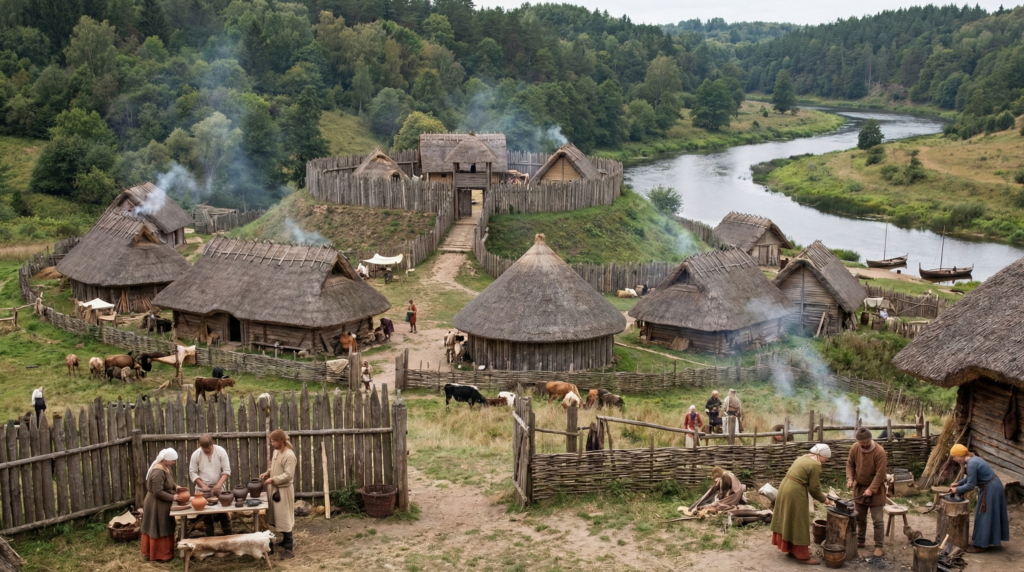
2. A Culture of Hillforts and Horses
The Sudovians were part of the West Baltic culture, cousins to the Old Prussians and the Lithuanians. However, they were distinct.
The Warrior Society: Medieval chroniclers described the Sudovians as exceptionally fierce. They were not merely defensive; they were raiders who struck deep into Polish and Rus’ territories. They lived in hillforts—fortified settlements built on mounds surrounded by water or steep slopes.
The Cult of the Horse: Like many Baltic peoples, the Sudovians held the horse in high spiritual regard. Archaeological excavations in places like Szurpiły (Poland) reveal rich burials where warriors were buried alongside their horses. This connects them culturally to the ancient Indo-European traditions of the Steppe.
The Wealth of Amber: Despite their warlike reputation, they were wealthy traders. They controlled key sections of the “Amber Road,” trading the precious “Baltic Gold” with the Roman Empire and later with medieval Europe. This trade wealth allowed them to craft intricate bronze jewelry and silver weaponry, markers of a sophisticated society.
3. The Genetic Profile: The Last of the Hunter-Gatherers
This is where the story gets fascinating for anyone looking at their Nexogeno Results.
The Baltic populations (Lithuanians, Latvians, and ancient Sudovians) are a genetic anomaly in Europe. They are not like the Western Europeans, and they are distinct from the Slavic populations.
The Sudovian Admixture Breakdown:
To understand a Sudovian genome, we have to look at the three ancient populations that formed Europe:
- Western Hunter-Gatherers (WHG): The original blue-eyed, dark-skinned inhabitants of Europe.
- Early European Farmers (EEF): The migrants from Anatolia who brought agriculture.
- Western Steppe Herders (Yamnaya): The Indo-Europeans who brought the language and warrior culture.
The “Baltic Drift”: Most of Europe is a balanced mix. However, the Sudovians (and modern Balts) have the highest retention of Western Hunter-Gatherer (WHG) DNA in all of Europe.
- WHG: ~20-30% (Very High). This makes them the closest genetic living relatives to the Mesolithic Europeans.
- Steppe: ~45-50% (Very High). This explains their Indo-European language and warrior culture.
- Neolithic Farmer: ~20-25% (Very Low). Unlike Southern Europeans who are mostly Farmer, Balts kept to the forests and absorbed fewer farmers.
This specific mix creates a genetic “drift” or uniqueness. If your results show a high percentage of “Baltic” combined with an unusually high affinity for ancient Hunter-Gatherer samples, you likely have Sudovian or Old Prussian ancestry.
4. Haplogroups: The Markers of the Yotvingians
When you analyze your dna raw data upload, specific haplogroups are the smoking gun for Sudovian ancestry.
Paternal (Y-DNA) Lineages
- N1c1 (N-M232): This is the quintessential “Baltic” marker. It originated in Siberia/Urals but arrived in the Baltic Sea region thousands of years ago. It is found in about 40% of modern Lithuanians. A specific subclade of N1c found in NE Poland is strongly linked to the Sudovian tribes.
- R1a (Z280 and Z92): While R1a is often called “Slavic,” it is actually “Balto-Slavic.” The Z92 branch, in particular, is often associated with the East Baltic tribes. The Sudovians carried high frequencies of R1a, linking them to the Corded Ware culture that settled the region 4,500 years ago.
Maternal (mtDNA) Lineages
- Haplogroup H: The most common in Europe.
- Haplogroup U5 and U4: These are the maternal lines of the ancient Hunter-Gatherers. Their frequency is higher in Baltic populations than almost anywhere else, reflecting that “native” forest ancestry.
- Haplogroup V: Found in lower frequencies but present in the Baltic rim.
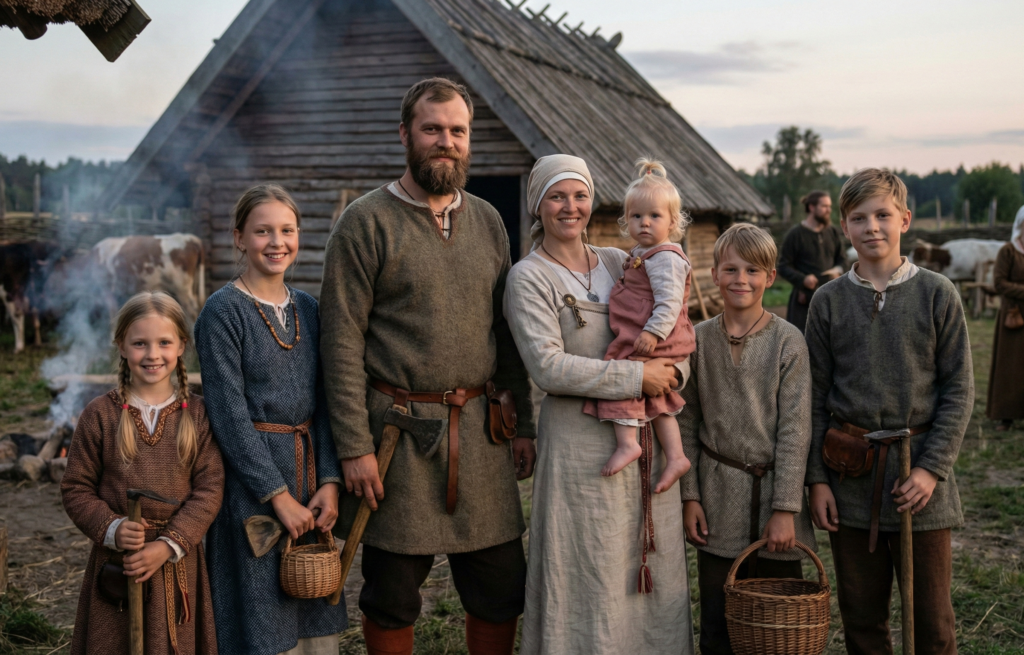
5. Answering the Confusing Questions: Identity and Assimilation
Because the Sudovian state was destroyed by the Teutonic Order in the 13th century, their identity has been claimed by many nations. Let’s look at the genetic reality.
Are Sudovians Lithuanians?
Genetically: Yes, very close. Lithuanians are the closest living relatives to the Sudovians. The Sudovians were a West Baltic tribe (like Prussians), while Lithuanians were East Baltic. However, after the Teutonic conquest, many Sudovians fled north into Lithuania. They were assimilated, and today, the Southern Lithuanian dialect is called “Sudovian” (Suvalkiečiai).
Are Sudovians Polish?
Ancestrally: Yes, for many. The Sudovians were not originally Polish. The Poles are Slavic; the Sudovians were Baltic. They spoke different languages. However, the territory of Sudovia (Suwałki) is now in Poland. The modern population of this region is a genetic mix of Slavic Polish settlers and the assimilated, Romanized, or Polonized Sudovian natives. If you are Polish from Podlaskie, you likely carry Sudovian DNA.
Are Sudovians Slavic?
No. This is a critical distinction. The Sudovians spoke a Baltic language, related to Old Prussian and modern Lithuanian. It was distinct from Slavic languages (like Polish or Russian). Genetically, Balts and Slavs are cousins (splitting from a common Balto-Slavic ancestor ~3,000 years ago), but they are distinct populations. Sudovians had higher WHG (Hunter-Gatherer) ancestry than the average Slav.
Is there Sudovian genetics in Ukraine?
Yes. This is a fascinating historical footnote. During the medieval wars, the princes of Kievan Rus’ (specifically Yaroslav the Wise) campaigned against the Yotvingians (Sudovians). They did not just kill them; they resettled them. Entire villages of Sudovian prisoners were marched south and resettled in the regions of Volhynia and near Kiev to guard the borders. Their descendants were assimilated into the Ukrainian population, leaving pockets of Baltic DNA in Northern Ukraine.
Is there Sudovian genetics in Russia?
Yes, but localized. Similar to Ukraine, the expansion of the Grand Duchy of Lithuania and the wars with Rus’ moved people around. Furthermore, the Goliad tribe (a Baltic tribe related to Sudovians) lived near Moscow (around the Protva river) long before the Slavs dominated the region. They were assimilated by Russians, but the Baltic genetic substrate remains in Western Russia.
6. What Can I Do With My Raw DNA Data?
You might be looking at a commercial DNA test result that says “Eastern European” or “Baltic: 20%.”
This is frustratingly vague. It tells you where your DNA is found today, but not who it came from. It doesn’t distinguish between a Slavic farmer from Krakow and a Baltic warrior from the Sudovian forests.
So, what can i do with my raw dna data?
The answer is to use a service that specializes in deep ancestry and paleo-genetics.
Why Upload? Standard testing companies use modern reference populations. They compare you to a modern Lithuanian. But NexoGENO can compare you to ancient samples.
If you are wondering where can i upload my dna, the answer is NexoGENO.com
Conclusion: The Spirit of the Forest Survives
The Sudovians were not wiped out. They were a people of the forest, and like the forest, they were resilient.
When their hillforts burned and their lands were conquered by the Teutonic Knights, they did not vanish into thin air. They married into Polish families, fled to Lithuanian villages, and were resettled in Ukrainian plains.
To carry Sudovian DNA is to carry a very specific, very ancient European legacy. It is the legacy of the last pagans of Europe. It is a genetic profile that has remained remarkably unchanged since the end of the Ice Age—a potent mix of the fierce Steppe rider and the resourceful Forest hunter.
If you have roots in the Baltic-Slavic borderlands, do not let your history be erased by a generic label. Your blood remembers the hillforts of Suwałki.
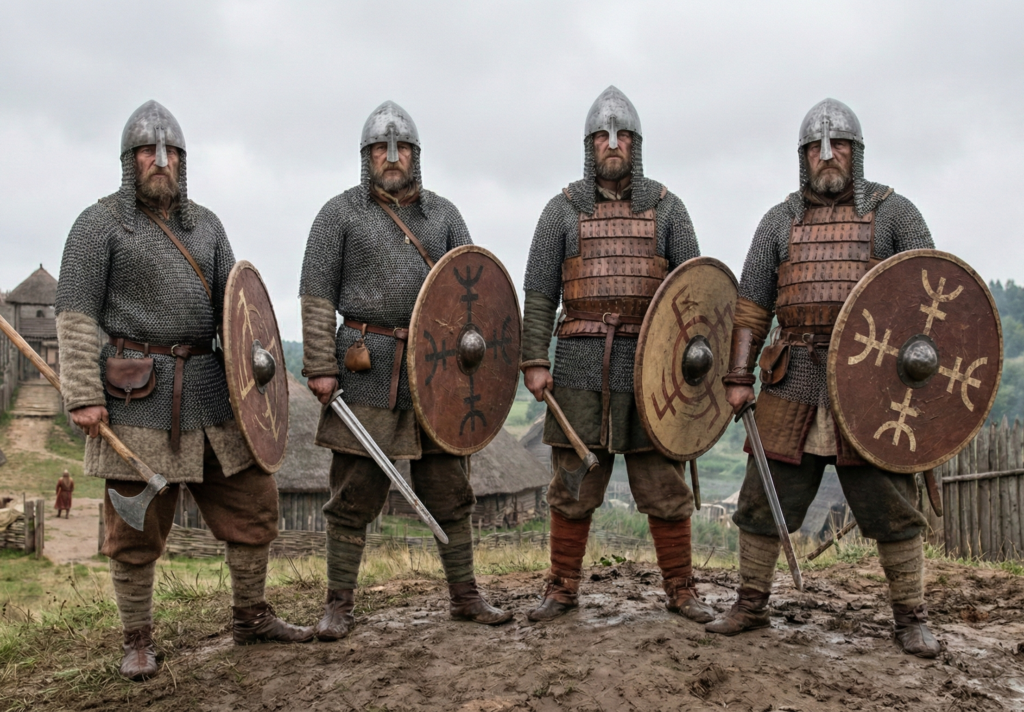
Unlock Your Warrior Heritage
Where can I upload my DNA? You can upload your raw data directly to NexoGENO.com.
We specialize in breaking down complex admixtures. We can help you discover if your “Eastern European” result hides the legacy of the fierce Sudovian tribes.
Discover if you have SUDOVIANS genetics by uploading at: https://nexogeno.com/our-products/