
Northern Italians: Are They Really Italian?
When the world thinks of “Italy,” a specific image comes to mind: sun-drenched olive groves, ancient Roman ruins, Mediterranean blue waters, and a people defined by dark hair, olive skin, and a classic Mediterranean vibrancy. This image is not wrong; it is simply incomplete. In fact, it only accurately describes one half of the peninsula.
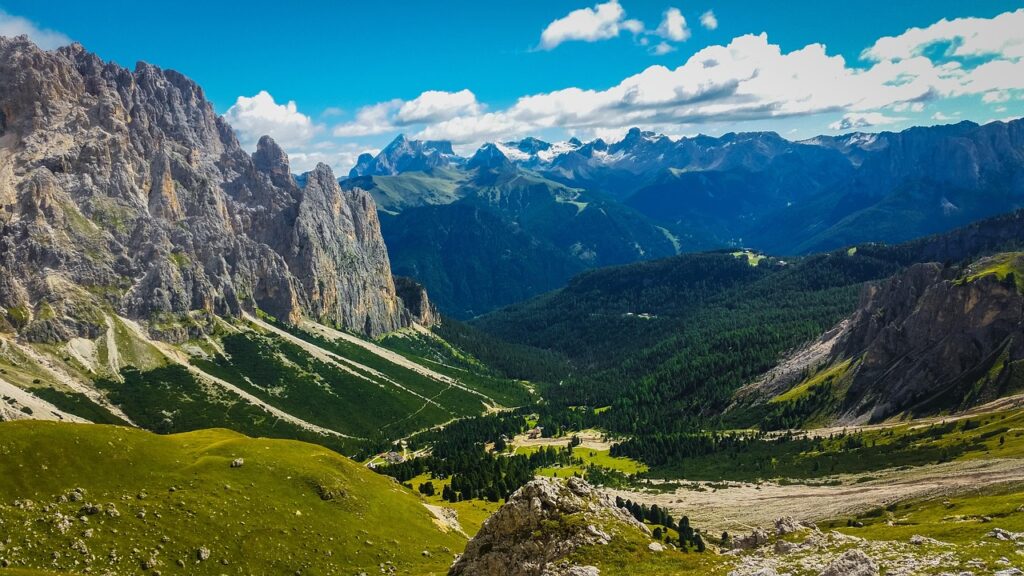
Welcome to Northern Italy—a land of Alpine peaks, bustling industry, and a population that, for many, looks, acts, and feels fundamentally different from the rest of the peninsula.
This striking difference isn’t just a local observation; it’s an objective scientific, cultural, and historical fact. The debate over northern italians vs southern italians is not just a modern rivalry; it’s a reflection of two distinct peoples, with different genetic origins, who were brought together under a single flag.
The modern state of “Italy” is a very recent invention, consolidated controversially between 1861 and 1871. This political unification, the Risorgimento, annexed lands that were, for millennia, genetically and culturally separate. The Kingdom of Sardinia-Piedmont, in essence, expanded to absorb its neighbors, including the lands of the Lombards, Venetians, and others.
But a shared passport does not erase thousands of years of separate genetic history. A deep dive into northern italian dna reveals a population that is not Mediterranean, but profoundly Continental European.
The Genetic Divide: Why Northern and Southern DNA Don’t Match
Population geneticists have repeatedly confirmed that the single greatest genetic divide in Europe is not between, for example, Germany and Spain, but the one that runs across the middle of Italy. The genetic distance between a person from Milan (in the North) and a person from Palermo (in Sicily, in the South) is greater than the distance between a Milanese and a person from London or Paris.
Let that sink in. A Northern Italian is genetically more similar to a Central European than to a Southern Italian.
So, what does northern italian dna actually show?
Southern Italian DNA is a classic Mediterranean profile. It is a rich tapestry of Neolithic Farmer ancestry (from Anatolia), followed by millennia of gene flow from the Near East, Greece, and North Africa. Groups like the ancient Greeks, Phoenicians, and Arabs left a profound and lasting mark.
Northern Italian DNA tells a completely different story. It is defined by its lack of this deep Mediterranean and Near Eastern admixture. Instead, its genetic profile was forged by three primary waves of migration that barely touched the south:
- The Celts (Gauls)
- The Germanic Tribes (Goths and Lombards)
- The Slavs (in the Northeast)
This makes the “Northern Italian” a fundamentally different genetic entity. Their history, their genetics, and their “people-hood” are Alpine and Continental, not Mediterranean.
Are Northern Italians Celtic?
Yes, to a significant degree.
Long before Roman legions marched north, the entire region known today as Northern Italy was called Gallia Cisalpina—”Gaul on this side of the Alps.” It was inhabited for centuries by powerful Celtic tribes, such as the Insubres (who founded Milan), the Cenomani, the Boii, and the Senones.
These Celtic peoples were not just a ruling elite; they were the foundational population of the region. They brought their “Hallstatt” and “La Tène” cultures, their languages, and their DNA. When Rome finally conquered the region, it Romanized these Celts, but it did not replace them genetically.
This ancient Celtic layer is a core component of the modern Northern Italian genome. It is a heritage they share with the French, the South Germans, and the Insular Celts (Irish, Scottish, Welsh), and it is a genetic signature that is almost entirely absent south of the Apennine mountains.
Are Northern Italians more Germanic?
Yes, significantly more so than any other population on the peninsula.
When the Western Roman Empire collapsed in 476 AD, it created a power vacuum. This vacuum was not filled by other Mediterranean peoples; it was filled by Germanic tribes from Scandinavia and Central Europe.
First came the Goths, but the most transformative migration was that of the Lombards (or Langobards). This powerful Germanic tribe swept into Italy in 568 AD and established the Kingdom of the Lombards, which lasted for over 200 years.
Crucially, their kingdom was centered in the North. Its capital was Pavia. The entire region of Lombardy is named after them. The Lombards didn’t just rule; they settled. They became the new aristocracy and landowners, and their Germanic DNA merged directly with the underlying Celto-Roman population.
This massive Germanic genetic infusion is a key differentiator for Northern Italians. It is another layer of Continental European ancestry that simply did not reach the South in any comparable numbers.
Are Northern Italians Slavic?
Partially, especially in the Northeast.
The third major influence that defines Northern Italy comes from the East. Starting in the 6th century, Slavic tribes began a massive expansion from Eastern Europe. They moved south into the Balkans and west around the Alps.
This migration heavily impacted the genetic makeup of the regions bordering modern-day Slovenia and Croatia, specifically Friuli-Venezia Giulia and parts of Veneto.
This Slavic gene flow adds another distinct, non-Mediterranean layer to the northern italian dna profile, connecting them to the very peoples (Slavs, Germanics, Celts) that Southern Italians would consider foreign.
So, Are Northern Italians Mediterranean?
No. Not genetically.
While they geographically inhabit the drainage basin of the Mediterranean Sea, their genetic makeup is not “Mediterranean” in the sense of a Southern Italian, a Greek, or a Levantine.
The DNA of Northern Italians is overwhelmingly Continental and Central European. They cluster tightly with the French, the Swiss, the South Germans, and the Austrians. They are an Alpine people, forged by the same Celtic, Germanic, and Roman-era populations that created France and Germany.
This genetic reality is the primary driver behind the northern italian vs southern italian appearance debate.
The stereotypical “Mediterranean” phenotype (olive skin, thick, dark hair, dark eyes) is a direct result of the high Neolithic Farmer and Near Eastern ancestries dominant in the South.
The common Northern Italian phenotype is a direct result of their Continental DNA:
- Skin: A much higher prevalence of fair skin that is more sensitive to the sun.
- Hair: A significantly higher frequency of lighter hair, including light brown, red, and blonde.
- Eyes: A much greater incidence of light-colored eyes, such as blue, green, and hazel.
This difference in northern italian vs southern italian appearance is not a stereotype; it is the visible, phenotypical expression of their fundamentally different genetic origins.
Conclusion: A Separate People, A Shared Passport
To ask “Are Northern Italians really Italian?” is to ask the wrong question. It implies “Italian” is a single, ancient, monolithic identity. It is not.
The “Italy” we see on a map today is a 19th-century political state that annexed a mosaic of different peoples. The Northern Italian people are a distinct ethnic and genetic group, with origins deeply rooted in the Celtic and Germanic heart of Europe.
They are a Continental European people. They live in territory annexed by the modern Italian state, but they do not share considerable genetic, cultural, or phenotypical similarities with the rest of the people who occupy that territory.
The history, the DNA, and the very appearance of the people tell the same story: the North is the North, and the South is the South.
Where Can I Upload my Raw DNA Data To Discover My Northern Italian Ancestry?
Are you one of the millions of people with Northern Italian heritage? Do you want to see the real data behind your origins, separating the deep Celtic and Germanic roots from the Mediterranean?
Discover your modern and ancient Northern Italian ancestry at: https://nexogeno.com/our-products/