
Mexican Genetics: The Rich Diversity Beyond a Single Label
What does it mean to be “Mexican?”
Is it the face of a person from Oaxaca with deep, thousand-year-old roots in the Zapotec civilization? Is it the face of a Norteño from Monterrey, whose family history is largely Spanish and French? Or is it the face of the Chilango in Mexico City, a blend of continents and the very definition of “Mestizo”?
The answer, of course, is all of them.
More than perhaps any other country in Central America, the Mexican genetics landscape is a story of staggering diversity. It is not one single narrative but a mosaic of many. The Mexicans genetic makeup is a living record of ancient empires, colonial conquest, and profound regionalism.
To ask “What is in Mexican DNA?” is to ask what is in the soil of a land that has been a cradle of civilization, a crossroads of empires, and a vibrant, modern nation. The answer is not simple, but it is fascinating. It’s a story of three pillars: the Indigenous foundation, the European infusion, and the resulting Mestizaje (mixture) that defines the nation, all existing simultaneously.
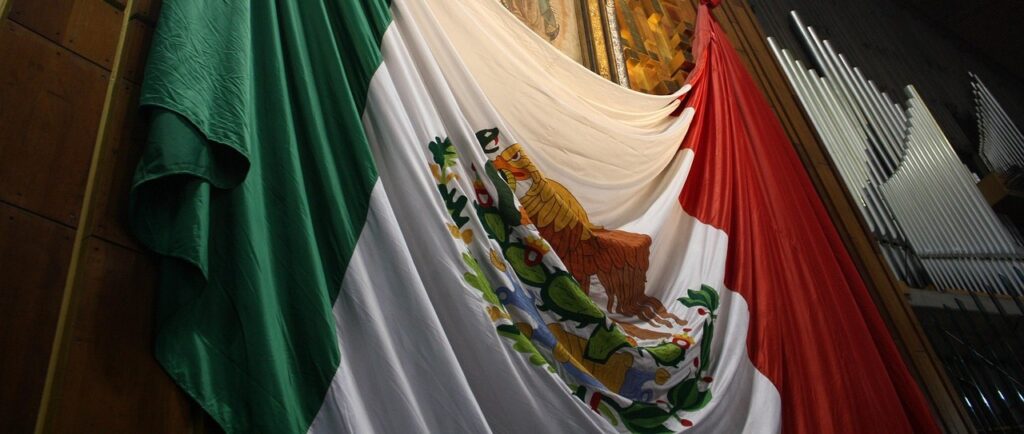
The Three Pillars of the Mexican People’s Ethnicity
Unlike a country with a more homogenous genetic history, Mexico is defined by the coexistence and mixture of three distinct ancestral groups.
1. The Indigenous Foundation (Native American Roots)
Before any European ship made landfall, the land we now call Mexico was a network of powerful civilizations. This wasn’t a sparse landscape of scattered tribes; it was home to millions of people in complex societies. The genetic foundation of all Mexicans is this indigenous heritage.
Key ancestral populations include:
- The Nahua (Aztecs): The dominant group in Central Mexico at the time of contact, their genetic and linguistic legacy is immense, particularly in the central states.
- The Maya: A civilization that flourished for millennia in the Yucatán Peninsula and south into Guatemala. Today, millions of people in the Yucatán, Chiapas, and Tabasco are direct descendants and speak Mayan languages.
- The Zapotec and Mixtec: The dominant peoples of Oaxaca, they represent some of the oldest continuous cultural and genetic lineages in the Americas.
- The Purépecha (Tarascans): Based in Michoacán, they were one of the few groups the Aztecs never conquered, maintaining a unique genetic and linguistic identity.
- The Totonac: From the Gulf Coast, primarily in Veracruz.
Today, many Mexicans, particularly in the southern states, are “puro” or almost fully Indigenous, carrying the undiluted genetic legacy of these and other pre-Columbian civilizations. A Mexican DNA test for someone from a village in Oaxaca may show 95-100% Native American ancestry.
2. The European Colonization (The Spanish Imprint)
In 1519, the arrival of Hernán Cortés and his fellow Conquistadors began a 300-year period of Spanish colonization. This event was not just a political or cultural shift; it was a massive genetic event.
The Spanish colonizers, primarily men from the Iberian Peninsula (Spain and Portugal), introduced a new European genetic component to the population. This ancestry is not trivial. In the average Mexican, it is a significant part of their DNA.
Crucially, this European ancestry is also not monolithic. While it is overwhelmingly Spanish (Iberian), subsequent, smaller waves of migration brought French, German, and Irish DNA into the mix, particularly in the northern states.
3. The Mestizo Nation (The Great Mixture)
For 500 years, these two foundational pillars—the Indigenous and the European—have been mixing. The result is the “Mestizo,” the term for a person of mixed European and Native American ancestry. This group forms the majority of Mexico’s population.
However, “Mestizo” is not a single genetic profile. It is a spectrum.
- One Mexican’s Mexicans genetic makeup might be 70% Indigenous and 30% European.
- Another, from a different city, might be 60% European and 40% Indigenous.
- A third might be 45% Indigenous, 45% European, and 10% West African (African slavery was present in Mexico, though on a smaller scale than in the Caribbean, leaving a distinct genetic echo, especially in coastal areas like Veracruz and Guerrero).
This spectrum is the heart of Mexican genetics. It is why a single Mexican DNA test can’t define “Mexican”; it can only define one Mexican’s unique position on this vast genetic map.
Answering the Big Questions: Hispanic vs. Latino vs. Native American
This complex genetic and cultural history leads to a lot of questions about identity. Let’s clear up the most common ones.
Are Mexicans Native American?
Fundamentally, yes. The vast majority of Mexicans (over 90%) have some degree of Native American ancestry. A very significant portion of the population (10-20%, depending on the definition) are “puro,” or fully indigenous. Even the “average” Mestizo Mexican is more Native American than European. The indigenous root is the non-negotiable foundation of the Mexican people.
Are Mexicans Latinos?
Yes. “Latino” (or the gender-neutral Latinx) is a geographic term. It refers to a person from Latin America, which includes Mexico, Central America, South America, and the Spanish-speaking Caribbean. Because Mexico is in Latin America, its people are Latinos.
Are Mexicans Hispanic?
Yes. “Hispanic” is a linguistic or cultural term. It refers to people who come from a Spanish-speaking country. As the national language of Mexico is Spanish, its people are Hispanic.
You can be both! “Hispanic” refers to language (Spain is Hispanic, but not Latino). “Latino” refers to geography (Brazil is Latino, but not Hispanic). Mexico sits at the intersection of both definitions.
Are Mexicans White?
Some are. Just as some Mexicans are fully Indigenous, a significant minority of Mexicans are “White” (known as Criollos or Euromestizos). These are Mexicans of predominantly or fully European ancestry, primarily Spanish, but also French, German, or Italian. They are as much a part of the modern Mexican fabric as the Indigenous and Mestizo populations.
This is the key: Mexico is a country where you can be fully Native American, fully European, or a mix of both, and be equally “Mexican.”
It’s All Regional: The Genetic Tapestry of Mexico
A common mistake is to think of Mexico as a single genetic entity. In reality, Mexican genetics are profoundly regional. A person’s DNA can almost predict what state they are from.
A 2014 landmark study in the journal Science, “The Genetics of Mexico,” analyzed the genomes of individuals from across the country and found a “striking” level of genetic differentiation between regions, as high as the difference between people from Western Europe and East Asia.
Here is a simplified breakdown of the regional differences:
- Northern Mexico (e.g., Sonora, Chihuahua, Nuevo León): This region generally shows the highest percentage of European ancestry. Colonization here was different, with fewer dense indigenous populations and more European (Spanish and non-Spanish) settlement.
- Central Mexico (e.g., Mexico City, Jalisco, Guanajuato): This is the heart of the “Mestizo” nation. Here you find the classic admixture, a true blend of the Spanish colonizers and the central Indigenous groups like the Nahua (Aztecs).
- The Gulf Coast (e.g., Veracruz): This region shows the highest levels of West African ancestry in Mexico, a genetic echo of the slave ports that operated here during the colonial era.
- Southern Mexico (e.g., Oaxaca, Chiapas, Guerrero): This is the Indigenous heartland. This region has the highest concentration of Native American ancestry. The Science study noted that some southern groups, like the Zapotec, have been genetically isolated for thousands of years.
- The Yucatán Peninsula (e.g., Yucatán, Quintana Roo): This region has a distinct genetic profile, dominated by the legacy of the Maya civilization.
What this means is that two Mexicans, one from the North and one from the South, could take a Mexican DNA test and receive results that look like they come from two different continents.
The Genetic Fingerprints: Your Ancestral Lines (Haplogroups)
Another way to see the “dual-origin” story of the Mexican people is by looking at haplogroups—the deep ancestral markers passed down from mother to child (mtDNA) and father to son (Y-DNA). The story they tell is one of the most dramatic examples of gender-biased admixture in the world.
The Maternal Story (mtDNA): The “Mothers of Mexico”
When we look at the maternal line, the story is overwhelmingly Indigenous.
According to geneticists such as Dr. Andrés Moreno-Estrada, a leading expert in Mexican genomics from LANGEBIO (National Laboratory of Genomics for Biodiversity), over 90% of all maternal (mtDNA) haplogroups in Mexico are of Native American origin.
This means that for 9 out of 10 Mexicans, their “mother’s mother’s mother’s…” line traces back to one of the original women who populated the Americas. The two most important and common maternal haplogroups in Mexico are:
- Haplogroup A2: This is one of the “founding” pan-American lineages, found all over North, Central, and South America. It is the single most common maternal haplogroup in Mexico.
- Haplogroup B2: This is the other major founding lineage in Mexico. Together, A2 and B2 account for the vast majority of Mexican maternal ancestry, a direct and unbroken genetic line to the first peoples of the continent.
The Paternal Story (Y-DNA): The “Fathers of Mexico”
When we look at the paternal line, the story flips completely.
A foundational study published in the European Journal of Human Genetics (Gorostiza et al., 2012) analyzed the paternal ancestry of the Mexican Mestizo population. It found that the Y-DNA is overwhelmingly European.
- Haplogroup R1b: This is, by a massive margin, the most common paternal haplogroup in Mexico (over 60%). R1b is the dominant haplogroup of Western Europe. Its presence in Mexico is the undeniable genetic signature of the Spanish Conquistadors and colonists.
- Haplogroup Q (specifically Q-M3/Q1a2a1a1): This is the second most common paternal haplogroup (at a much lower frequency, around 15-20%). Haplogroup Q is the quintessential Native American paternal lineage. This is the genetic line of the Aztec, Maya, and Zapotec fathers.
This genetic picture is stark and tells the clear story of colonization: the paternal gene pool of modern Mexico is primarily European, while the maternal gene pool is primarily Indigenous.
Conclusion: A Nation of Many Peoples
So, what is the Mexicans genetic makeup?
It is a story of continents colliding. It is Indigenous, it is European, it is African, and it is the beautiful, complex Mestizaje that resulted.
Various types of people live in and form the modern, vibrant nation of Mexico. They are the pure-blooded Indigenous communities of the South, who are the guardians of ancient civilizations. They are the White Mexicans of European descent, who carry the legacy of colonization and subsequent migrations. And they are the Mestizo majority, who are the living embodiment of the mixture of these two worlds.
The Mexican people ethnicity is not one thing. It is a spectrum. And in that diversity is its greatest strength.
Discover Your Ancestry
Are you one of the millions of people with Mexican heritage?
Discover your modern ancestry at: https://nexogeno.com/product/modern-ancestry-haplogroup-report/
Where can I upload my raw DNA data?
You can upload your raw DNA data on www.nexogeno.com