
When we dig through the ruins of European history, we tend to focus on the big names: the Romans with their legions, the Greeks with their philosophers. But quietly holding the ground between them, inhabiting one of Europe’s most rugged and strategic territories, were the Illyrians.
The Illyrians weren’t just a historical footnote; they were the tough-as-nails protagonists of their own story. They were a collection of fierce, warlike tribes who dominated the Western Balkans for over a millennium, clashing with Macedonian kings, vexing Greek colonists, and eventually becoming the literal backbone of the late Roman Empire.
There was no single empire of Illyria, but there was an Illyrian people—a force so resilient that their genetic and cultural legacy has endured plagues, invasions, and empires.
Today, thanks to the power of ancient DNA, we are no longer guessing. We can finally trace the illyrian dna haplogroup markers, see where their descendants live, and understand the deep, powerful legacy of these ancient survivors.
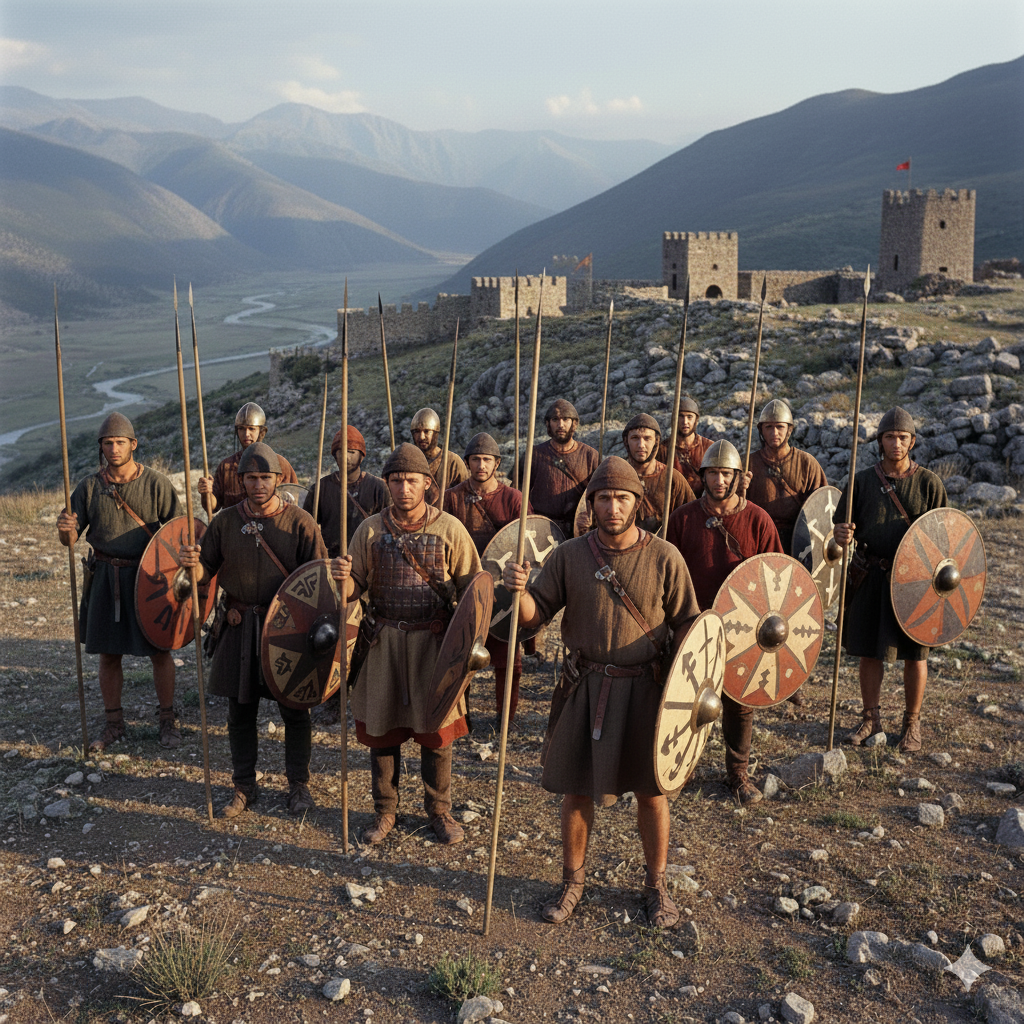
The Big Questions: Setting the Record Straight
Before we dive into the genetics, let’s clear up the most common (and confusing) questions about the Illyrians.
Where did the Illyrians come from?
The Illyrians were a Paleo-Balkan people. Their story begins in the Bronze Age, around 4,000 years ago. They didn’t “come from” anywhere recently; they were forged in the Balkans. Their ancestors were likely a mixture of the first Neolithic farmers who settled the region and a new wave of Indo-European-speaking pastoralists who migrated from the steppes. This fusion, isolated by the high peaks of the Dinaric Alps, created the unique cultural and genetic profile we call Illyrian.
Are Illyrians Indo-Europeans?
Yes. This is a crucial starting point. The Illyrians spoke a distinct branch of the Indo-European language family. While their language is now extinct (with one notable exception, which we’ll get to), it was part of the same ancient linguistic super-family that includes English, Spanish, Russian, and Hindi. They were not, however, the same as their neighbors.
Are Illyrians Greeks?
No. This is a common mix-up. The Illyrians and the ancient Greeks were neighbors, and they were not always friendly neighbors. They were distinct peoples, speaking different languages and worshipping different gods (though they often borrowed from each other). The Greeks founded colonies on the Illyrian coast, and the Illyrians (particularly the infamous Queen Teuta) practiced piracy on Greek shipping. They were separate, often rival, civilizations.
Are Illyrians Slavic?
Absolutely not. This is the single biggest misconception. The Illyrians pre-date the Slavic migrations by at least 1,000 years.
The Illyrians flourished during the Iron Age and were eventually conquered and assimilated by the Roman Empire. The great Slavic migration into the Balkans didn’t happen until the 6th and 7th centuries AD, long after the Illyrian tribes had ceased to exist as distinct political entities. The Slavs (ancestors of modern Serbs, Croats, Bosnians, etc.) arrived and mixed with the remaining, Romanized Illyrian population.
The Albanian Connection: The Last Illyrians?
This is the most important question, and the one most likely to start a good-natured (or not-so-good-natured) Balkan argument.
Were Illyrians Albanians?
The evidence for this is incredibly strong. While it’s impossible to draw a perfect line, modern Albanians are the single best candidates for being the direct descendants of the Illyrians. The argument rests on three powerful pillars:
- Geography: The territory of modern Albania is the heartland of what was once southern Illyria. They have inhabited the same rugged, mountainous region for millennia.
- Linguistics: The Albanian language is a linguistic isolate. It’s an Indo-European language, but it doesn’t belong to the Slavic, Greek, or Italic branches. It sits all by itself. Linguists believe it is the last surviving descendant of the ancient Paleo-Balkan languages, likely Illyrian.
- Genetics: This is the new, conclusive evidence. Ancient DNA studies on Illyrian graves, when compared to modern populations, show the strongest genetic continuity with modern Albanians.
While other Balkan peoples (Kosovars, Montenegrins, Croatians, Bosnians) all carry significant Illyrian DNA, it is mixed with a large Slavic component. Albanians, due to their mountainous isolation, received far less of this Slavic admixture, preserving an almost “pure” Paleo-Balkan genetic profile.
The Illyrian DNA Haplogroup: Tracing the Genetic Signature
How do we “see” Illyrian DNA? We look for specific genetic markers, or haplogroups, that are passed down unchanged through generations.
Paternal (Y-DNA) Haplogroups
These lineages trace the “father’s father’s father’s” line. According to groundbreaking studies like The genetic history of the Southern Arc (Lazaridis et al., 2022, Science) and other papers on Balkan genetics, the signature of the Illyrians and related peoples is clear.
- J2b-L283: This is often considered the quintessential Paleo-Balkan haplogroup. Its origins are deeply tied to the Bronze and Iron Age in the Western Balkans. It is found at its absolute highest frequencies in the world among Albanians (especially in Kosovo and Albania proper) and Montenegrins. This is, without a doubt, a primary Illyrian lineage.
- R1b-PF7562 (and R1b-Z2103): This is the other major player. It represents the branch of the original Indo-European “steppe” migrants who entered the Balkans and became the Illyrians. While R1b is common in Western Europe (like Ireland), this R1b-Z2103 branch is a distinct “Balkan/Anatolian” version. It is found in high levels in all Illyrian-associated populations.
Maternal (mtDNA) Haplogroups
These lineages trace the “mother’s mother’s mother’s” line. The Illyrian maternal lines are a broad mix of common European and Near Eastern haplogroups that have been present in the Balkans since the Neolithic. The most common were:
- Haplogroup H: The most common maternal lineage in all of Europe.
- Haplogroups J & T: These lineages are very common and trace back to the first Neolithic farmers who brought agriculture to Europe from the Near East.
The Roman Emperors Who Saved the Empire
The Illyrians weren’t just “barbarians.” They became the heart and soul of the Roman military in the late empire. The region of Illyricum (the Roman province) produced so many tough, brilliant soldiers that they created an entire era known as the “Illyrian Emperors.”
These were not aristocrats from Rome; they were sons of Illyrian peasants and soldiers who rose through the ranks to save the empire from collapse.
Was Diocletian Illyrian?
Yes. Diocletian, the man who ended the “Crisis of the Third Century” and stabilized the entire Roman Empire, was a “pure” Illyrian. He was born in Salona, in modern-day Croatia.
Was Constantine the Great Illyrian?
Yes. The emperor who legalized Christianity and founded Constantinople was also Illyrian. He was born in Naissus, in modern-day Serbia. His father, Constantius, was also an Illyrian officer.
Was Justinian Illyrian?
Yes. Justinian the Great, the emperor who reconquered Italy and codified Roman law (the Corpus Juris Civilis), was one of the last “Roman” emperors, and he was a native Illyrian speaker from Tauresium, near modern-day Skopje, North Macedonia.
The men who defined the final, powerful phase of the Roman Empire were, by birth, language, and stock, Illyrians.
The Illyrian Race: What Did They Look Like?
Xe can discuss the common phenotype (physical appearance) of the Illyrians, based on skeletal remains and the traits of their modern descendants in the Dinaric Alps.
The “Dinaric” phenotype is the name given to this classic look:
- Stature: Generally very tall. The Dinaric Alps region (Montenegro, Bosnia, Croatia) has the tallest average male height in the world.
- Head Shape: Brachycephalic, meaning a broad, wide, and short skull. A key feature is a flattened back of the head (planocciput).
- Features: Often a prominent or “aquiline” nose.
- Coloring: Typically varied, from fair skin and lighter eyes (common in the north) to more olive skin and dark hair (common in the south), but the “Dinaric” type refers more to skeletal structure than to coloring.
Conclusion: The Survivors
The Illyrians never vanished. They were not wiped out by the Romans, nor were they completely replaced by the Slavs. They endured.
They became Roman citizens. They became the emperors who ruled the world. And when the empires fell, their core population retreated into the mountains of Albania and the Western Balkans, preserving their language and their unique genetic heritage.
Today, the ancient DNA of the Illyrians flows in the veins of millions of people across the Balkans. They are the great survivors of European history, a testament to the power of resilience.
Where can I upload my raw DNA data Discover My Illyrian Ancestry?
Do you have roots in the Balkans? Or are you curious if your ancestors were part of the Roman legions, carrying Illyrian blood across the empire? The only way to find out is to look at your own DNA.
If you have already tested with another service, you can upload your raw data to NexoGENO. Our Ancient Ancestry Report compares your DNA against archaeological samples, including those from Illyrian sites, to see if you share a link with these indomitable ancient people.
Discover your ancient ancestry at: https://nexogeno.com/our-products/
HOW MUCH DOES A ANCIENT ANCESTRY & TEST COST?
To get your full, detailed Modern Ancestry & Haplogroup Report, the cost is only $15.00 on NexoGENO.