
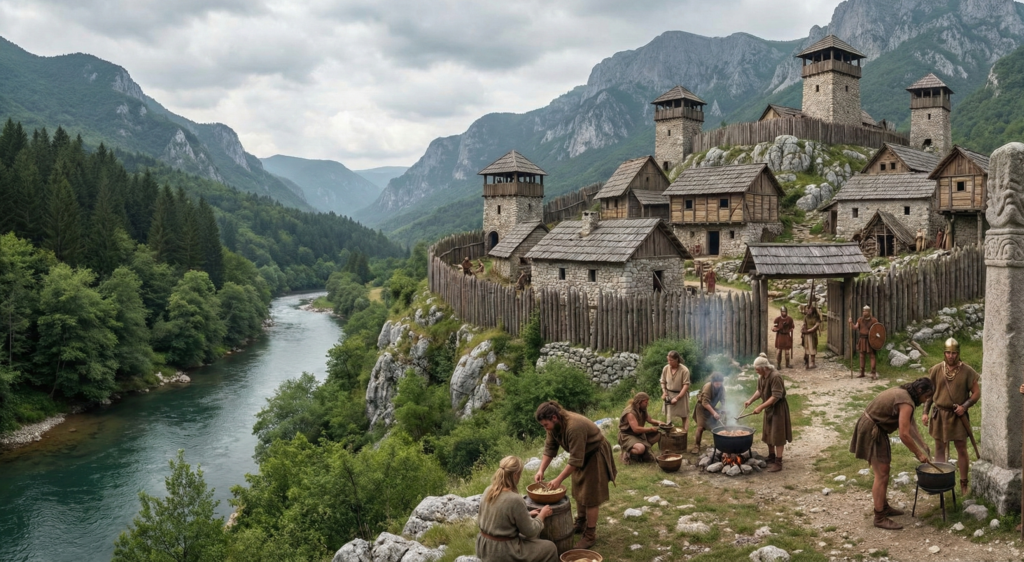
History often focuses on the empires—the Romans, the Greeks, the Celts. But hiding in the rugged limestone valleys of the Dinaric Alps, sandwiched between the Adriatic Sea and the Pannonian Plain, lived a people so fierce and distinct that they defied categorization for centuries.
They were the Iapodes.
Often overshadowed by their more famous neighbors, the Iapodes (or Iapydes) were one of the most significant tribal confederations of the ancient Balkans. They were the gatekeepers of the trade routes between the Mediterranean and Central Europe, master artisans of amber, and warriors who gave the young Octavian (future Emperor Augustus) one of the hardest fights of his life.
But they did not vanish. While their name disappeared from maps, their biological signature did not disappear from the bloodlines of Europe.
Today, thanks to advances in paleogenetics and the ability to analyze dna raw data upload, we can finally reconstruct the genome of this mysterious group. If you have roots in the Western Balkans, Northern Italy, or Central Europe, the Iapodes might be the missing link in your ancestral story.
In this article, we will explore who they were, the unique blend of “Old Europe” and Steppe genetics that defined them, and answer the burning questions about their connection to modern nations like Croatia, Bosnia, and Albania.
1. The Japodic Homeland: Masters of the Valleys
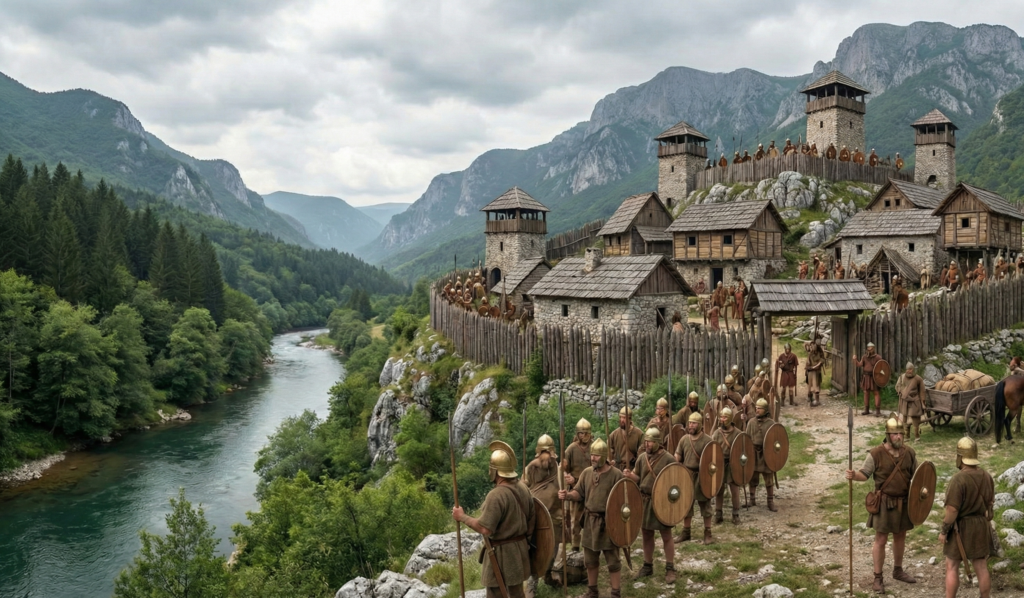
To understand the Iapodes, you must understand their land. They inhabited the interior of the ancient province of Illyricum.
Specifically, their territory covered the modern geographic region of Lika in Croatia, the Gorski Kotar region, and the Una River Valley in western Bosnia and Herzegovina. This was a land of dense forests, karst mountains, and river valleys—a natural fortress.
Their capital was Metulum (near modern-day Josipdol, Croatia). For centuries, they controlled the flow of goods between the Adriatic coast and the Pannonian interior. Unlike the coastal Illyrians who were pirates and sailors, the Iapodes were highlanders, herders, and miners.
Where is their genetic input found today? Because they were a massive population in this specific region, their genetic legacy is most concentrated in:
- Modern Croatia: Specifically the Lika, Kordun, and Gorski Kotar regions.
- Western Bosnia: The Bihać region and the Una valley.
- Slovenia: Particularly in the southern regions bordering Croatia (White Carniola).
- Northeast Italy: Due to proximity and trade, there was significant gene flow into the Friuli and Veneto regions.
2. The Culture of Amber and Iron
The Iapodes were culturally unique. Archaeologists identify them by their specific burial customs and incredibly distinct art.
While their neighbors adopted Greek or Roman styles, the Iapodes maintained a stubborn, native aesthetic. They were famous for their amber jewelry. Amber, brought down from the Baltic Sea, was crafted by Iapodic artisans into intricate figures, necklaces, and brooches.
The “Iapodic Headgear”: One of the most striking cultural markers was the headgear worn by Iapodic women. Depicted on bronze urns, these women wore elaborate, horned, or fan-shaped headdresses. This suggests a society where women held significant status and maintained unique cultural traditions distinct from the Romanized world around them.
They were a warrior society, but also a settled one. They lived in hillforts (prominent settlements on high ground) and practiced a mix of agriculture and herding. This settled lifestyle is key to understanding their genetics—they were not nomads; they were the bedrock population of the region.
3. The Genetic Profile: A Unique Ancient Mix
What did an Iapode look like genetically? Using modern admixture tools on ancient samples, we can reconstruct their average DNA breakdown.
The Iapodes represent a fascinating bridge between two worlds. Ancient Greek geographer Strabo described them as a mixed people: part Illyrian and part Celtic. Modern genetics largely supports this view of a “mixed” or transitional zone.
The Iapode Admixture Breakdown:
- Early European Farmers (EEF) (~50-60%): Like most Southern Europeans, the base of Iapodic DNA came from the Neolithic Farmers who migrated from Anatolia thousands of years ago. This gave them dark hair, brown eyes, and the ability to digest milk. This percentage is higher than in Celtic populations of France/Germany but lower than in Greeks or Sardinians.
- Western Hunter-Gatherers (WHG) (~10-15%): The Iapodes retained a significant amount of DNA from the original Mesolithic inhabitants of the Balkans. This substrate is often linked to the robust physical build found in the Dinaric Alps.
- Steppe Pastoralists (Yamnaya) (~30-35%): This is the Indo-European component. It arrived in the Bronze Age. However, the Iapodes had slightly less Steppe DNA than the Celts of Central Europe, but more than the coastal Mediterranean populations.
This specific ratio—high Farmer, moderate Steppe, significant Hunter-Gatherer—created a unique genetic cluster in the Western Balkans.
4. The Haplogroups: The Molecular Fingerprint
If you are looking at your Nexogeno Results, specific haplogroups (paternal and maternal lines) are strong indicators of Iapodic ancestry.
Paternal (Y-DNA) Lineages
- J2b2-L283: This is the “Paleo-Balkan” marker par excellence. It is strongly associated with Illyrian-speaking peoples. Its presence in the Lika and Una regions suggests it was a major lineage among the Iapodes. If you carry J2b-L283, your male line was likely in the Balkans during the Bronze Age.
- R1b-U152 (and L2): This is the “Celtic” or “Italo-Celtic” connection. Strabo mentioned the Iapodes were mixed with Celts. The presence of these R1b subclades in the region confirms that Continental Celtic men mixed with the local Paleo-Balkan population to form the Iapodic tribe.
- G2a: A lineage from the original Neolithic farmers, preserved in the mountainous regions of the Balkans.
Maternal (mtDNA) Lineages
- Haplogroup H: The most common European lineage, present in all Iapodic ancient DNA samples.
- Haplogroup U5: The hunter-gatherer maternal line, relatively common in the ancient West Balkans compared to the rest of the Mediterranean.
- Haplogroup J and T: Lineages associated with the spread of agriculture.
5. Answering the Hard Questions: Identity and Legacy
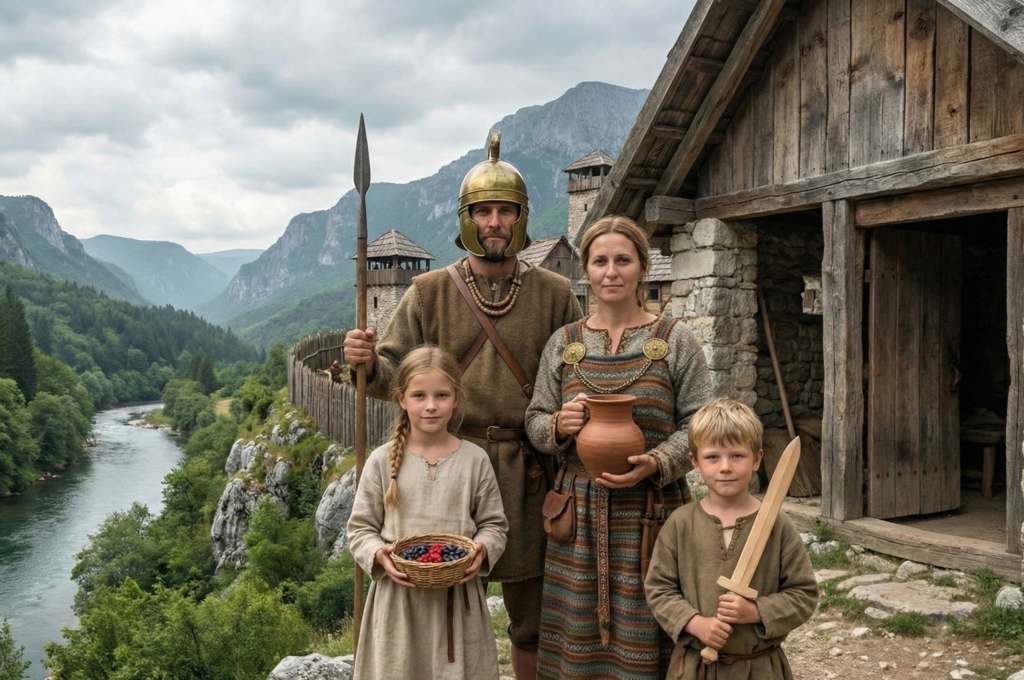
The identity of the Iapodes is a subject of debate among historians, but genetics offers clarity. Let’s answer the most common questions.
Were the Iapodes Illyrians?
Yes and No. “Illyrian” was often a broad label used by Greeks for everyone north of Epirus. Culturally, the Iapodes were distinct from the “real” Illyrians of the southern coast (like the Ardiaei). Genetically, they were part of the Illyrian genetic continuum, sharing the same J2b2-L283 base. However, they were heavily influenced by the Pannonian Urnfield culture and later by the Celts. It is most accurate to call them Illyrian-Pannonian with Celtic admixture.
Are the Iapodes Croats?
Ancestrally, yes. The modern Croatian nation is a Slavic nation. The Croats arrived in the 7th century AD. However, they did not find an empty land. They found the Romanized descendants of the Iapodes. Over centuries, the Slavic settlers mixed with the native Iapodic population. Today, a modern Croat from Lika or Gorski Kotar carries significant Iapodic DNA masked by a Slavic language and cultural identity. The genetics of modern Croatia is a mix of Slavic (R1a) and Paleo-Balkan (I2a/J2b/R1b) ancestry.
Are the Iapodes Bosnians?
Yes, specifically Western Bosnians. The Una River valley (Bihać region) was the heartland of the Iapodes. The modern population of Western Bosnia is genetically very similar to the population of Southern Croatia. They are the direct descendants of these ancient tribes, later influenced by Slavic migrations and Ottoman rule.
Are the Iapodes Slovenians?
Partially. The Iapodes inhabited the southern fringe of modern Slovenia (White Carniola). However, the core of Slovenia was inhabited by other groups like the Carni (Celts) and Taurisci. Slovenians today are genetically more Northern/Central European (more Slavic and Germanic input) than the Iapodes were, but there is certainly Iapodic input in the south.
Is there Iapodic genetics in Albania?
Yes, but it is distant. Albanians are the primary linguistic and genetic descendants of the Paleo-Balkan peoples (likely Illyrians). Therefore, they share a common “ancestral grandfather” with the Iapodes (the Bronze Age Illyrian population). However, the Iapodes were a northern, inland tribe, while the ancestors of the Albanians were southern. They share the J2b2-L283 marker, but the Iapodes had more “Central European/Celtic” admixture, while Albanians maintained a more “Southern Balkan” profile.
Is there Iapodic genetics in Northeast Italy?
Yes. The Iapodes were neighbors to the Veneti (an ancient Italic people). There was constant trade and movement across the Alps and the Adriatic. The “Castellieri” culture of Istria and Friuli shows links to the Iapodes. Modern Northeast Italians carry genetic markers that point to trans-Adriatic gene flow from the Balkans.
6. What Can I Do With My Raw DNA Data?
This is the most important question for anyone interested in this history.
You may have taken a test with a commercial company and received a result saying “Balkan” or “East European.” This is vague and unsatisfying. It tells you geography, not history. It doesn’t tell you if you are Iapode, Daunian, or Slavic.
This is why you need to ask: what can i do with my raw dna data?
The answer is: Upload it to a forensic-grade analysis service.
Standard commercial tests smooth out the “noise.” But for finding ancient tribes like the Iapodes, the “noise” is the data. You need a service that compares your genome not just to modern country borders, but to ancient archaeological samples.
By using a dna raw data upload service, you can access tools that measure your distance to ancient populations. You can see if your genetic profile sits closer to the Iron Age sample from the Lika region (Iapode) or the Iron Age sample from Central Europe (Celt).
Conclusion: The Forgotten Ancestors
The Iapodes were not merely a footnote in Roman history books. They were a vibrant, resilient culture that thrived in the harsh beauty of the Dinaric Alps. They wore amber, worshiped their own gods, and fought ferociously for their independence.
They did not disappear. They evolved. They became the Romanized provincials of Dalmatia, and later, their bloodlines merged with the incoming Slavs to create the modern populations of Croatia and Bosnia.
To carry Iapodic DNA is to carry the signature of survival. It is the DNA of the mountains, a blend of the Mediterranean south and the Continental north. It is a lineage that has stood guard over the passes of the Balkans for four thousand years.
If you have results that point to the Balkans, do not settle for a generic label. Your history is specific, powerful, and waiting to be uncovered.
Unlock Your Ancient Past
Where can I upload my DNA? You can upload your raw data directly to NexoGENO.com.
We specialize in deep ancestry and paleo-genetics. We can compare your DNA against specific Iron Age Balkan populations to see if you carry the legacy of the amber-trading warriors of the Una Valley.
Discover if you have IAPODES genetics by uploading at: https://nexogeno.com/our-products/