
When we think of the Roman Empire, we often picture the Colosseum in Rome. But for centuries, the true heart of the empire—its breadbasket, its mine, and the birthplace of its greatest emperors—lay to the west.
It was Hispania.
The Romans did not just conquer the Iberian Peninsula; they fell in love with it. They called it the “land of rabbits” (from the Punic I-Shpania), but they transformed it into a land of olive oil, gold, and unparalleled culture. From the misty mountains of Asturias to the sunny coast of Baetica, Hispania became the most Romanized region outside of Italy itself.
But what happened to the people who lived there? They did not disappear when Rome fell. They are the ancestors of modern Spaniards and Portuguese, and through the age of exploration, their DNA has traveled to the Americas and beyond.
Today, thanks to Nexogeno Results, we can look past the history books and read the genetic story written in your blood. By performing a dna raw data upload, you can uncover whether you carry the legacy of the Celtiberian warriors, the Roman settlers, and the complex tapestry that is the Hispanic genome.
In this article, we will explore the genetic reality of the Hispania Roman province, analyze the unique “admixture” that defines the Iberian Peninsula, and answer the burning questions about Roman blood and ancient wars.
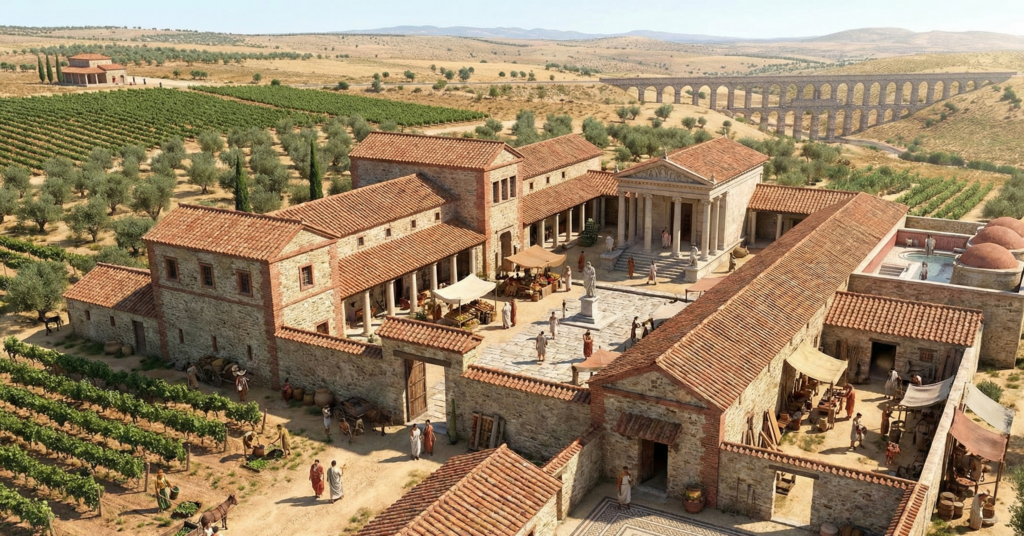
1. The Land of Hispania: A Peninsula of Many Nations
Before it was a unified Roman province, the peninsula was a patchwork of distinct tribes. To understand your genetic results, you must understand who these people were before the legions arrived.
The Geographic Split:
- The Mediterranean Coast (The Iberians): These were sophisticated, urbanized people who traded with Greeks and Phoenicians. They spoke a non-Indo-European language. Genetically, they were very similar to the “Early European Farmers” of the Neolithic, with less Steppe influence.
- The Center and West (The Celtiberians & Lusitanians): These were Indo-European speakers, a fusion of the native population and incoming Celtic tribes from Central Europe. They were fierce warriors living in hillforts (castros).
- The North (The Cantabri & Astures): Isolated in the rugged mountains, these people maintained a distinct, archaic culture and were the last to submit to Rome.
Where is Hispania’s genetic input found today? The genetic signature of ancient Hispania is the foundational bedrock of:
- Spain and Portugal: Obviously, the modern populations are the direct descendants.
- Latin America: Due to colonization, the “Hispano-Roman” genetic profile is a major component of the gene pool in Mexico, Colombia, Argentina, Brazil, and beyond.
- Southern France: The region of Occitanie shares deep genetic roots with Northern Spain (Catalonia and Aragon).
2. The Roman Transformation: Was Hispania the Roman Empire?
A common question is: Was Hispania part of the Roman Empire?
Yes, absolutely. In fact, it was the Empire in many ways. Hispania was the first major province conquered by Rome on the mainland of Europe and one of the last to be lost. It was not a colony; it was a fully integrated part of the Roman world.
The “Spanish” Emperors: The integration was so complete that Hispania produced some of Rome’s most legendary leaders. The “Five Good Emperors” era was dominated by Hispanic blood. Trajan (the conqueror) and Hadrian (the builder) were both born in Italica (near modern Seville) to families of settlers. The philosopher-emperor Marcus Aurelius also had Hispanic roots.
Culturally, the people of Hispania adopted the toga, the Latin language (which evolved into Spanish, Portuguese, and Catalan), and Roman law. But genetically, they remained a unique mix. The Romans didn’t replace the population; they added to it.
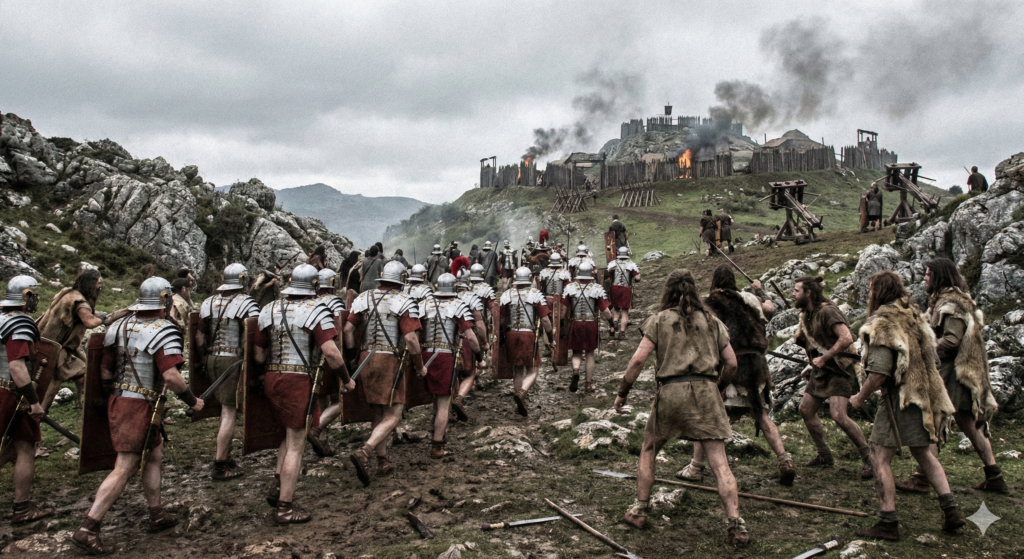
3. The Resistance: Why Did the Cantabrian Wars Happen?
While the south of Hispania (Baetica) welcomed Rome with open arms, the north was a different story. This brings us to one of the most brutal chapters in Iberian history.
Why occurred the Cantabrian Wars? Lasting from 29 BC to 19 BC, these wars were the final stage of the Roman conquest of Hispania. Emperor Augustus himself had to come to Spain to lead the legions.
- Resources: The mountains of the Cantabri (modern Cantabria/Asturias) and Astures were rich in gold mines (like Las Médulas). Rome needed this gold to back its currency.
- Independence: The northern tribes were fiercely independent highlanders who refused to bow to a foreign power.
The Genetic Consequence: Because of this fierce resistance and the geography, the North of Spain (especially the Basque country and Cantabria) remained genetically distinct. They absorbed less “Roman/Mediterranean” DNA than the south. Today, we see this in the higher frequencies of Steppe ancestry and lower North African admixture in the north compared to the south.
4. The Genetic Profile: The Iberian Recipe
If you upload your DNA to a service like NexoGENO, what does a “Hispania” profile look like? It is a specific blend of three ancient ancestral streams.
The Admixture Breakdown:
- Early European Farmers (EEF) (~45-55%): This is the dominant component. The original Neolithic farmers who arrived from Anatolia found a paradise in Iberia. This component is responsible for the Mediterranean phenotype (dark hair, brown eyes). Iberians have some of the highest EEF percentages in Europe, especially on the east coast.
- Western Steppe Herders (Yamnaya) (~30-35%): This is the Indo-European/Celtic component. It arrived in the Bronze Age (associated with the R1b haplogroup). It is highest in the North and West. This is what connects Spaniards genetically to the French and British.
- Western Hunter-Gatherers (WHG) (~10-15%): The native, blue-eyed hunters of the Mesolithic (like “La Braña Man”). Iberia served as a refuge during the Ice Age, so this ancient lineage is well-preserved here.
The Roman “Topping”: On top of this Iron Age base, the Roman period added a layer of East Mediterranean DNA (from Italy, Greece, and the Levant). This is found at higher levels in the South and East of the peninsula, following the trade routes of the Hispania Roman province.
5. Haplogroups: The Markers of the Peninsula
When you analyze your dna raw data upload, specific haplogroups tell the story of Hispania.
Paternal (Y-DNA) Lineages
- R1b-DF27: This is the “King” of Iberian markers. It is a specific mutation of the Celtic/Steppe lineage that occurred in the Pyrenees region during the Bronze Age. Today, it is found in 40-70% of Spanish and Portuguese men. If you have R1b-DF27, your ancestors were the Celtiberians who fought against (and later for) Rome.
- E1b1b: This marker connects Hispania to North Africa and the Mediterranean. While often associated with the later Moorish period, ancient DNA shows it was present in Hispania even during the Roman era, likely brought by soldiers and traders from other parts of the Empire.
- J2 and G2a: These are lineages often linked to the spread of agriculture and the Roman expansion. They represent the “civilizers” who built the aqueducts and villas.
Maternal (mtDNA) Lineages
- Haplogroup H (specifically H1 and H3): These distinct branches of the most common European haplogroup are extremely frequent in Iberia. They likely expanded from a refuge in Franco-Cantabria after the last Ice Age.
- Haplogroup U5: The deep Hunter-Gatherer maternal line.
- Haplogroup V: A lineage with a strong presence in the Basque country and Northern Spain.
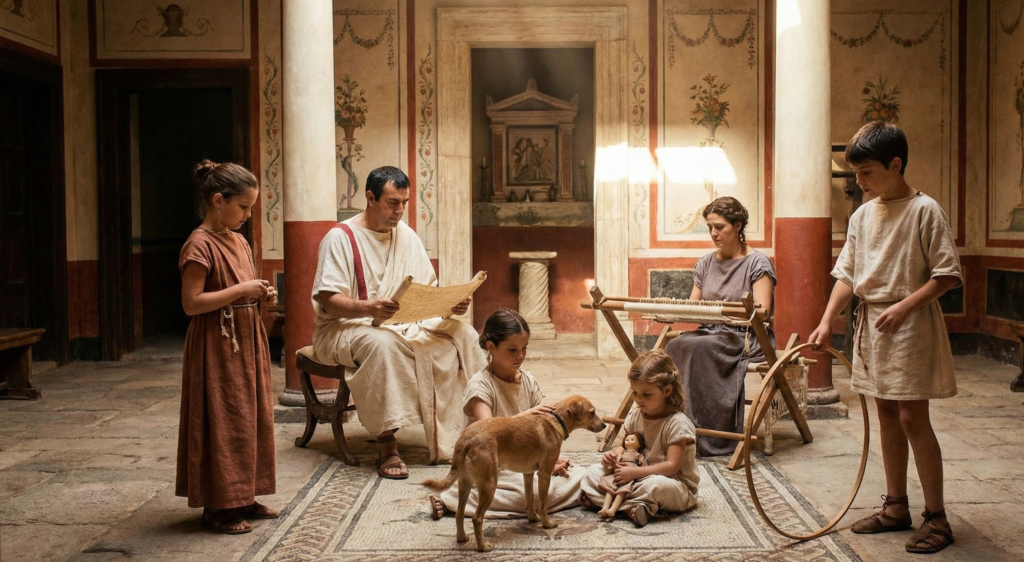
6. The Million Dollar Question: Do Iberians Have Roman Blood?
This is the question every user wants to know.
“Roman” was a citizenship, not just a genetic cluster. The city of Rome itself was a genetic melting pot of Italians, Greeks, North Africans, and Near Easterners. However, there was significant gene flow from the Italian Peninsula into Hispania.
- Veterans: Rome settled tens of thousands of retired legionaries in colonies like Mérida (Emerita Augusta) and Seville (Italica). These men married local Iberian women, introducing Italic DNA into the gene pool.
- Elites: The aristocracy moved back and forth.
- Slaves and Merchants: The economy brought people from all over the Mediterranean.
So, while the base of the modern Spanish/Portuguese genome is pre-Roman (Iron Age Celtiberian), there is a definite, measurable input from the Italian peninsula and the wider Eastern Mediterranean that arrived during the 600 years of Roman rule. Modern Spaniards are genetically shifted toward Italians compared to their Iron Age ancestors.
7. Unlocking Your Heritage with NexoGENO
Standard DNA tests often group everything under “Iberian” or “Southern European.” They fail to capture the nuance of the Hispania Roman province. They don’t distinguish between the Celtic-heavy DNA of Galicia and the Roman/Mediterranean-heavy DNA of Andalusia.
This is why you need to ask: where can i upload my dna?
The NexoGENO Solution: By performing a dna raw data upload to NexoGENO, you can access a forensic-grade analysis.
- Ancient Admixture: We can compare your genome to actual ancient samples from Roman Hispania necropolises.
- Regional Specificity: We identify if your genetic profile aligns more with the Basque/Cantabrian cluster (the survivors of the wars) or the Baetica/Mediterranean cluster (the heart of Roman civilization).
- Haplogroup Deep Dive: We break down your R1b or J2 markers to see if they align with specific migration waves.
Conclusion: The Empire Lives in You
Hispania was more than a province; it was a civilization. It was a land where the rugged endurance of the Celtiberians met the organizational genius of Rome. It produced emperors, philosophers, and poets.
The people of Hispania survived the fall of Rome, the Visigothic invasion, and the Moorish conquest, absorbing each wave to create the modern Hispanic identity.
If your DNA results point to the Iberian Peninsula, you are the heir to this magnificent legacy. You carry the resilience of the Cantabrian mountaineers and the sophistication of the Roman citizens of Italica. Do not let this history remain hidden in a generic “Southern European” label.
Claim Your Roman Legacy
Where can I upload my DNA? You can upload your raw DNA data directly to NexoGENO.com.
We specialize in ancient ancestry. Let us compare your DNA against the citizens of the Empire to see how much of Hispania lives on in you.
Discover if you have genetics of HISPANIA by uploading at: https://nexogeno.com/our-products/
Follow us on: Facebook – Instagram – Reddit
Read about modern spaniards: https://nexogeno.com/spaniard-dna-results-4-remarkable-truths-spanish-dna/