
When you look at a map of Europe, you see borders. But when you look at Germanic DNA, you see a flood.
The story of the Germanic peoples is not limited to the modern borders of Germany. It is one of the most dynamic and explosive chapters in human history. From the foggy shores of the Baltic Sea, these tribes—the Angles, the Saxons, the Franks, the Goths, the Lombards, and the Vikings—surged outward to shatter the Roman Empire and build the foundations of the modern Western world.
If you have taken a German DNA test, you might be surprised by your results. You might find “Germanic” ancestry not just in Berlin or Munich, but in London, Paris, Northern Italy, and across the Americas.
Understanding German DNA requires peeling back the layers of history to reveal the ancient migrations, the fierce warrior culture, and the massive diaspora that spread these genes to every corner of the globe.
Today, we are exploring the deep roots of this lineage, the specific haplogroups that define it, and answering the confusing questions about who the Germanic people really are.
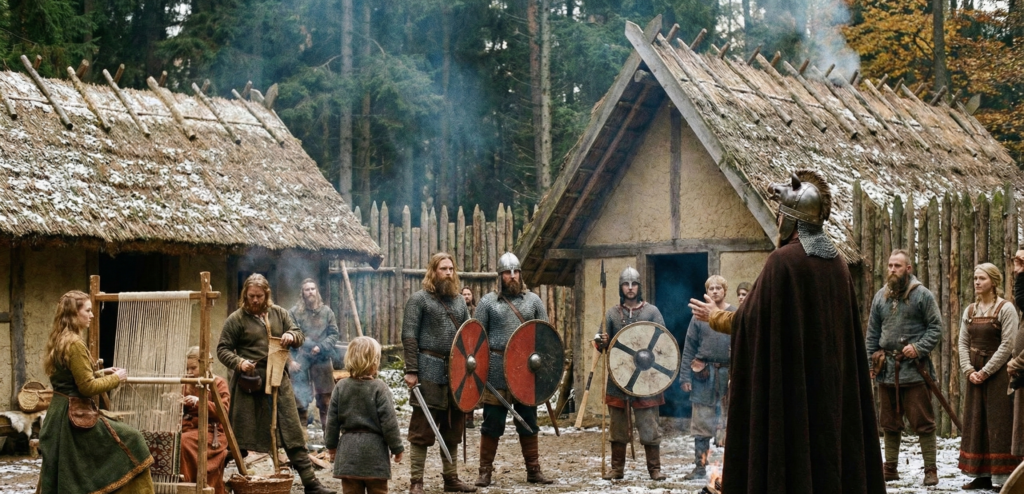
1. The Origins: Where Did Germanic Tribes Come From?
To understand your Germanic DNA, we must go back to the source.
Where did Germanic tribes come from? The “Urheimat” (original homeland) of the Germanic peoples is located in Southern Scandinavia (modern Denmark and Sweden) and Northern Germany.
Around 1700 BC, during the Nordic Bronze Age, a distinct culture began to form in this region. Genetically, they were a fusion of three ancient groups:
- Western Hunter-Gatherers: The original dark-skinned, blue-eyed inhabitants of Europe.
- Early European Farmers: Who brought agriculture from the Middle East.
- Corded Ware Culture (Steppe Pastoralists): The most significant component. These horse-riding warriors from the Pontic-Caspian steppe brought the Proto-Germanic language and the “warrior” genetic profile (high R1a and R1b).
This isolated mix in the Nordic Bronze Age incubator created the “Germanic” genetic signature. From roughly 750 BC onwards (the Jastorf Culture), they began to expand south, pushing into Celtic territory and eventually colliding with Rome.
2. The Great Invasions: How Germanic DNA Reshaped Europe
The reason Germanic DNA is found all over Europe is due to the Völkerwanderung (The Migration Period). As the Roman Empire crumbled, Germanic tribes flooded in, leaving a permanent genetic mark.
England (The Anglo-Saxons)
The most famous migration. Tribes of Angles, Saxons, and Jutes from Northern Germany and Denmark crossed the sea to Britannia.
- Genetic Impact: Modern English people derive about 30-40% of their DNA from these Germanic migrants.
- Key Markers: High frequencies of I1 and R1b-U106.
France (The Franks)
France gets its name from the Franks, a Germanic tribe from the Rhineland. While the population remained largely Gallo-Roman (Celtic), the Frankish elite ruled for centuries.
- Genetic Impact: Strongest in Northern and Eastern France, where “German” admixture is significant.
Italy (The Lombards/Longobards)
A Germanic tribe from the Elbe river region marched all the way to Italy in 568 AD, settling primarily in the North.
- Genetic Impact: This is why Northern Italians are genetically distinct from Southern Italians. The “Lombardy” region is named after them, and many Northern Italians carry Germanic Y-DNA haplogroups.
Spain (The Visigoths and Suebi)
The Visigoths and Suebi settled in the Iberian Peninsula. While they were a ruling minority and their overall genetic impact was lower than in England, they left specific haplogroup signatures in regions like Castile and Galicia.
3. The Global Diaspora: German Genes in the Americas
The story didn’t end in the Middle Ages. In the 18th, 19th, and 20th centuries, millions of Germans left Europe, creating a massive New World diaspora.
United States
German is the single largest self-reported ancestry in the USA. From the “Pennsylvania Dutch” to the massive settlements in the Midwest (Wisconsin, Minnesota, Dakota), German DNA is a foundational pillar of American genetics.
- Common Haplogroups: The American mix is a perfect reflection of Northern Europe, dominated by R1b-U106 and I1.
Brazil
Brazil hosts the second-largest German diaspora in the world. Southern states like Santa Catarina and Rio Grande do Sul have cities (like Blumenau and Pomerode) where German dialects are still spoken.
- Genetic Impact: In Southern Brazil, the genetic profile is often indistinguishable from Central Europe.
- Key Markers: High frequency of R1b and I1, distinct from the Portuguese/Mediterranean profile of other regions.
4. The Science: Key Haplogroups of the Germanic People
When you upload dna for analysis, we look for specific “haplogroups”—deep ancestral tags—that scream “Germanic.”
Paternal (Y-DNA) Haplogroups
- Haplogroup I1 (I-M253):
- The Nordic Marker. This is the quintessential Germanic marker. It originated in Scandinavia ~4,000 years ago. If you have this, your direct paternal line was almost certainly present in the Nordic Bronze Age. It is found in 30-40% of Scandinavians and 15-30% of North Germans.
- Haplogroup R1b-U106 (S21):
- The West Germanic Marker. This is a specific branch of the great R1b family. It is distinctively “Germanic” (as opposed to the Celtic R1b-L21). It is the dominant lineage in the Netherlands, Northern Germany, and Austria.
- Haplogroup R1a (Z284 & M458):
- The Eastern Connection. While often associated with Slavs, specific branches of R1a are purely Germanic/Nordic, found heavily in Scandinavia and Eastern Germany.
Maternal (mtDNA) Haplogroups
- Haplogroup H (specifically H1 and H3):
- The most common maternal lineage in Europe, carried by nearly 45% of Germanic women. It represents the successful expansion of farming and Bronze Age populations.
- Haplogroup U5:
- An extremely ancient lineage from the original European hunter-gatherers. It is found at higher frequencies in Northern Europe (Germany/Scandinavia) than in the South, representing the preservation of “native” European DNA in the Germanic DNA gene pool.
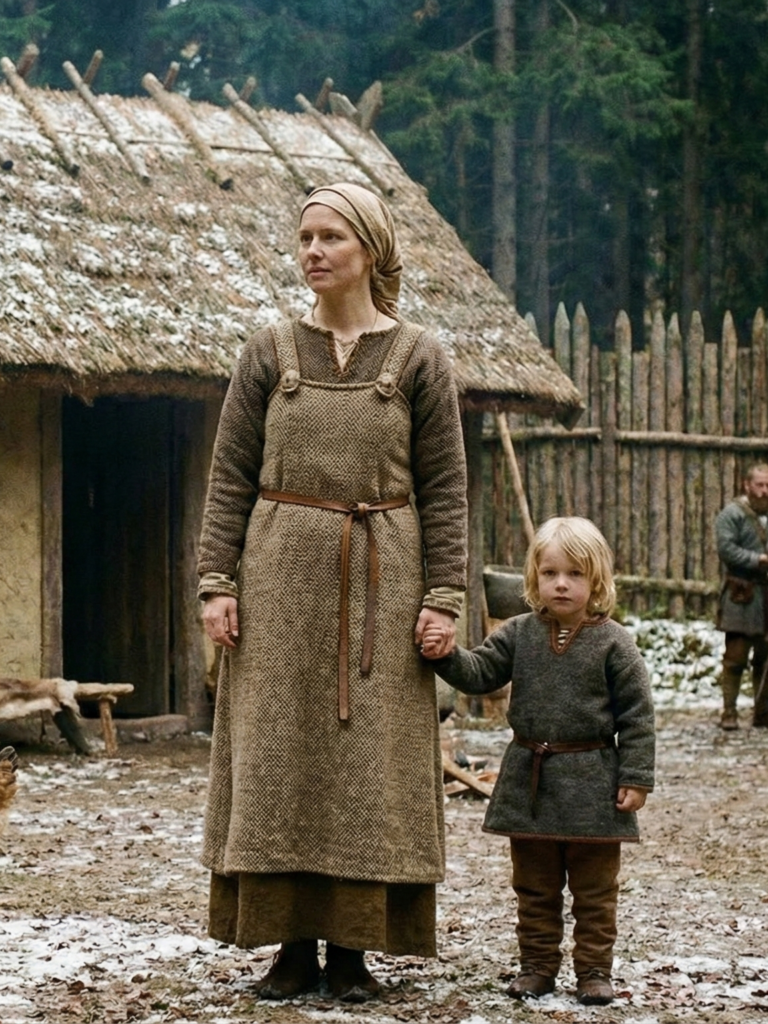
5. Answering the Confusing Questions
Germanic identity is complex. Let’s clear up the most common questions people ask when they see their results.
Are Germans Nordic?
Genetically, yes. Especially Northern Germans. There is no sharp genetic border between Denmark and Northern Germany. They share the exact same Bronze Age origins and the same dominant haplogroups (I1, R1b-U106). Culturally, “Nordic” usually refers to Scandinavian countries, but genetically, the populations are cousins.
Are Germans Slavic?
Generally no, but with exceptions. The “original” Germanic tribes were not Slavic. However, modern Eastern Germany (former Prussia, Saxony) has significant Slavic admixture. For centuries, the Elbe river was a border zone. Germans expanded east (Ostsiedlung), assimilating Slavic tribes like the Wends and Sorbs. So, an East German might have 10-20% Slavic DNA, but the core Germanic profile is distinct from the Slavic one.
Are Germanic people Celtic?
No, they are distinct branches. Both Germanic and Celtic peoples descend from the Indo-European Steppe herders, so they are distant “cousins.” However, they split thousands of years ago.
- Celts evolved in Central Europe (Alps/Austria).
- Germanics evolved in the North (Scandinavia/Northern Germany). They have different languages, different cultures, and distinct genetic markers (R1b-U106 for Germanics vs. R1b-L21/U152 for Celts).
Where Can I Upload My DNA?
If you have taken a test with AncestryDNA, 23andMe, or MyHeritage, you might feel the results are too broad. They might just say “Northwestern Europe” or “Broadly German.”
To get the specific breakdown—to see if your line is Saxon, Frankish, or Viking—you need deeper analysis.
Where can I upload my dna? You can upload your raw DNA data to NexoGENO.
We specialize in breaking down broad categories into specific historical populations. We can look for the specific markers that differentiate a North German from a Dutchman, or an Anglo-Saxon descendant from a Celtic one.
Conclusion: The Engine of Europe
Germanic DNA is perhaps the most “successful” genetic signature of the last 2,000 years. From a small collection of tribes in the frozen forests of the North, they expanded to shape the languages, borders, and genetics of half the world.
Whether you are an American with roots in the Midwest, a Brazilian from Santa Catarina, or a Briton from East Anglia, finding Germanic DNA in your results connects you to a history of exploration, resilience, and transformation.
Don’t settle for “Broadly European.” Uncover the warrior lineages and migration paths hidden in your genes.
Discover Your True Heritage
Discover your Germanic DNA and ancient origins at: https://nexogeno.com/our-products/