
When we hear the word Celts, our minds immediately drift to the misty highlands of Scotland, the emerald fields of Ireland, or the rugged coast of Wales. We think of bagpipes, kilts, and King Arthur. But this is only the final chapter of a much older, much grander story.
The true story of the Celts does not begin on an island. It begins in the heart of Europe.
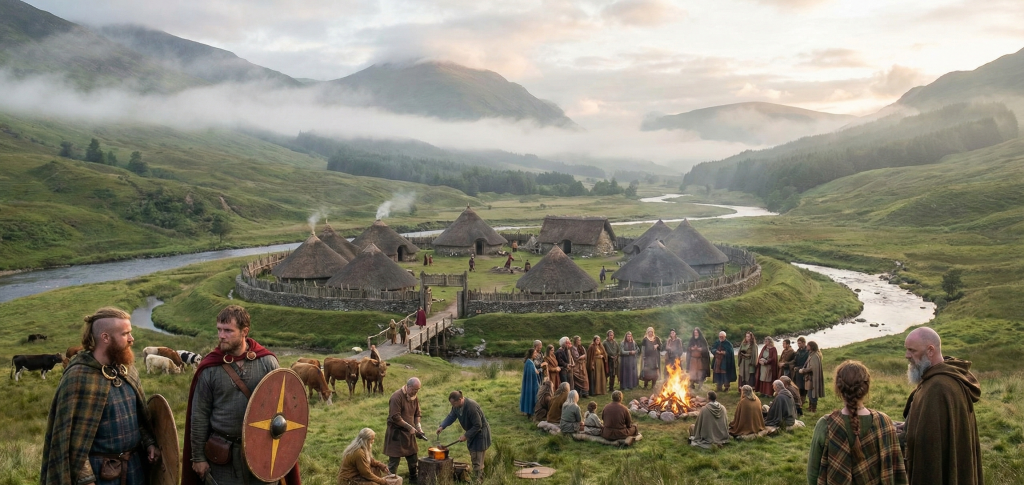
Long before they reached the Atlantic, the Continental Celts were the undisputed masters of Europe. They were the Iron Age powerhouses who sacked Rome, terrified the Greeks at Delphi, and established a cultural network that stretched from modern-day Turkey to Portugal. They were the Gauls of France, the Celtiberians of Spain, the Lepontii of the Alps, and the Galatians of Anatolia.
For centuries, history has treated them as a vanished people, “wiped out” by the Roman legions or Germanic tribes. But science tells a different story.
Thanks to the revolution in ancient DNA analysis, we now know that the Continental Celt never really disappeared. Their genetic legacy is alive, thriving, and hiding in plain sight within the DNA of millions of modern Europeans.
Today, we delve into the genome of these ancient warriors to understand the distinction between continental vs insular celts, trace their migrations, and answer the burning questions about their fate.
1. The Origins: Where the Celts Came From
To find the source of Celtic DNA, we must look to the Iron Age cultures of Central Europe, specifically the region around the Alps, modern-day Austria, and southern Germany.
Where did the Celts come from? The genetic formation of the Proto-Celts occurred in the Late Bronze Age (around 1200 BC) through the fusion of the local Urnfield culture populations. By 800 BC, this had evolved into the Hallstatt Culture (named after a site in Austria). This was the cradle of the Continental Celts.
These early Celts were a wealthy, aristocratic society, enriched by salt mining and trade. Genetically, they were the descendants of the Bell Beaker people (who brought the Indo-European R1b lineage) mixed with the local Neolithic farmers of the Danube basin.
From this Alpine heartland, they exploded outward in the subsequent La Tène period (c. 450 BC), driven by population pressure and a warrior culture that prized expansion.
2. The Great Dispersion: An Empire Without an Emperor
The Continental Celts did not build a centralized state like Rome. Instead, they formed a vast cultural confederation of tribes. Their dispersion created distinct genetic clusters across Europe.
The Iberian Connection (Celtiberians)
One of the earliest migrations (c. 600 BC) went west, crossing the Pyrenees into the Iberian Peninsula (Spain and Portugal). Here, the Continental Celts mixed with the local pre-Indo-European Iberian populations.
- Genetic Marker: This fusion created the Celtiberians. Today, the genetic echo of this migration is strongest in northern and western Spain (Galicia, Asturias, Castile). The distinct R1b-DF27 haplogroup, dominant in Iberia, is strongly linked to this specific Celtic expansion.
The Italian Invasion (Cisalpine Gauls)
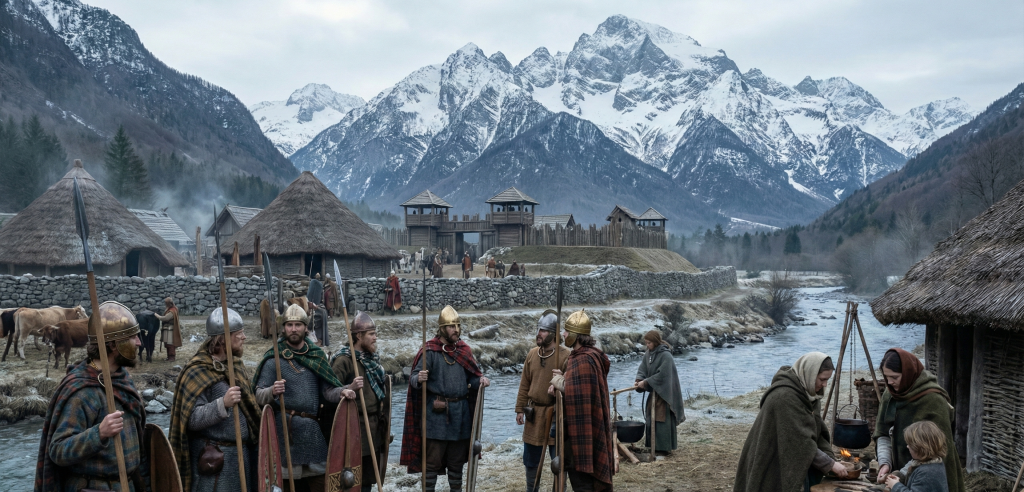
Around 400 BC, massive waves of Continental Celts poured over the Alps into Northern Italy. Tribes like the Insubres (who founded Milan), the Boii (who gave their name to Bologna), and the Senones settled the Po Valley.
- Genetic Marker: They turned Northern Italy into “Gallia Cisalpina” (Gaul on this side of the Alps). To this day, the genetic profile of Northern Italians is distinct from Southern Italians, partly due to this profound Celtic substrate.
The Eastern Expansion
They didn’t just go west. They went east, following the Danube. They settled in the Balkans (the Scordisci tribe in Serbia) and even crossed into Anatolia (modern Turkey), establishing the region of Galatia. St. Paul’s “Letter to the Galatians” in the Bible was addressed to the descendants of these Continental Celts.
3. Continental vs Insular Celts: The Great Genetic Divide
This is the most critical distinction for anyone interested in Celtic DNA.
Continental vs Insular Celts refers to the geographic and linguistic split between the Celts of mainland Europe (Gaul, Iberia, Alps) and the Celts of the British Isles (Ireland, Scotland, Wales).
While they shared art, gods, and iron-working technology, their genetic paths diverged significantly.
- Insular Celts (The Atlantic Type): The Celts who migrated to the British Isles became genetically isolated. Their dominant paternal marker became R1b-L21. If you have high levels of this marker, your Celtic roots are distinctly Irish, Scottish, or Welsh.
- Continental Celts (The Alpine Type): The Celts who remained and expanded on the mainland developed a different profile. Their dominant paternal marker is R1b-U152 (also known as S28). This is the “Italo-Celtic” marker. It is found in high frequencies in Switzerland, Northern Italy, Southern France, and Southern Germany, but it is rare in Ireland.
This proves that while the Irish and the Swiss share a “Celtic” heritage, they represent two different branches of the same ancient tree.
4. The Genetic Signature: Haplogroups of the Continental Celts
How do we identify a Continental Celt in a modern DNA test? We look for specific haplogroups that correlate with archaeological sites from the Hallstatt and La Tène periods.
Paternal (Y-DNA) Haplogroups
- R1b-U152 (The Alpine King): As mentioned, this is the defining marker. It is the signature of the Hallstatt and La Tène core. If your Y-DNA is U152, your ancestors were likely riding with the Gauls or living in the shadow of the Alps.
- R1b-DF27 (The Iberian Branch): Dominant in the Celtiberians and modern Basques/Spaniards.
- R1b-U106 (The Germanic Interface): While often considered Germanic, this marker is found in Celtic context along the Rhine river, showing the close relationship and mixture between early Celts and Germanic tribes.
Maternal (mtDNA) Haplogroups
Their maternal lines show a deep continuity with the earlier populations of Central Europe.
- Haplogroup H: Specifically subclades like H1 and H3.
- Haplogroup U5: The deep European hunter-gatherer lineage.
- Haplogroup J and K: Lineages associated with the spread of agriculture and later integrated into Celtic society.
5. What Did Continental Celts Look Like?
The Continental Celt phenotype is often misunderstood because of the modern stereotype of the “ginger” (red-haired) Scot or Irishman. While related, the Continental populations were more diverse.
What did Continental Celts look like? Roman historians like Diodorus Siculus and Strabo left us vivid descriptions of the Gauls. They described them as:
- Tall and Muscular: They were physically imposing compared to the shorter Mediterranean Romans.
- Light Complexion: They were described as having fair skin (“milk-white” according to some Roman texts).
- Hair Color: While red hair was present, blond hair was extremely common among the Continental Celts. In fact, Diodorus notes that they often washed their hair in lime water to make it even blond-er. Brown hair was also common.
- Eye Color: Light eyes (blue, green, hazel and gray) were the norm.
They were not dark-haired or olive-skinned like the Romans, nor were they exclusively red-headed like the stereotype of the Insular Celts. They looked like modern Central and Northern Europeans.
Answering the Lost Questions: What Happened to Them?
The historical narrative often suggests they are vanished. This is false. They underwent cultural assimilation, not biological extinction.
What happened to the Continental Celts?
They were conquered, primarily by two forces:
- The Roman Empire: Julius Caesar’s conquest of Gaul (58-50 BC) killed many, but millions survived. They became Gallo-Romans. They adopted Latin (which eventually evolved into French, Spanish, and Northern Italian dialects), wore togas, and built villas. But their DNA remained Celtic.
- The Germanic Tribes: In the north and east, Celtic tribes were absorbed by expanding Germanic groups (like the Franks and Alamanni). They switched to Germanic languages, but the population base remained largely Celtic.
Are Continental Celts in Ibéria?
Yes. The Celtiberians were a major force. Today, biological markers of the Celts are abundant in Spain and Portugal, particularly in the north. The Lusitanians (of Portugal) and the Gallaeci (of Galicia) were Celtic peoples. Modern Spanish DNA, especially R1b-DF27, is a direct legacy of this presence.
Are Continental Celts in Northern Italy?
Yes, significantly. The region was known as Gallia Cisalpina for centuries. The Boii, Insubres, and Cenomani tribes settled there permanently. Today, Northern Italians cluster genetically closer to the French and Central Europeans than to Southern Italians, largely due to this Continental Celtic heritage.
Are Continental Celts in Ireland?
Mostly No. This is the nuance. The Irish are Insular Celts. While the ultimate origin of Celtic culture lies on the continent, the specific people who settled Ireland (carrying the R1b-L21 marker) split from the main Continental group early on. You will find very little of the Continental-specific R1b-U152 marker in indigenous Irish DNA. They are cousins, not the same immediate family.
Conclusion: The Ghost in the Machine
They did not die out. They are the “ghost in the machine” of modern Europe.
When you look at a Frenchman, a Northern Italian, a Swiss, or a Spaniard, you are often looking at a descendant of the Continental Celts. Their languages may be Romance (Latin-derived) or Germanic today, but their blood is Iron Age.
They were the architects of Europe north of the Alps. They built the first roads that Romans later paved. They founded the cities of Milan, Paris (named after the Parisii tribe), and Ankara.
Understanding Continental vs Insular Celts allows us to see the full picture. It moves us beyond the stereotype of the “fringe” Celt and restores them to their rightful place as the indomitable masters of the European mainland. Their DNA survived the Roman legions, survived the Barbarian migrations, and lives on in the population of Europe today.
Uncover Your True Heritage
Do you carry the marker of the Alpine chieftains or the Iberian warriors? Standard tests often miss the distinction between the different Celtic groups.
Discover your ancient ancestry and find out if you have Celt heritage at: https://nexogeno.com/our-products/