
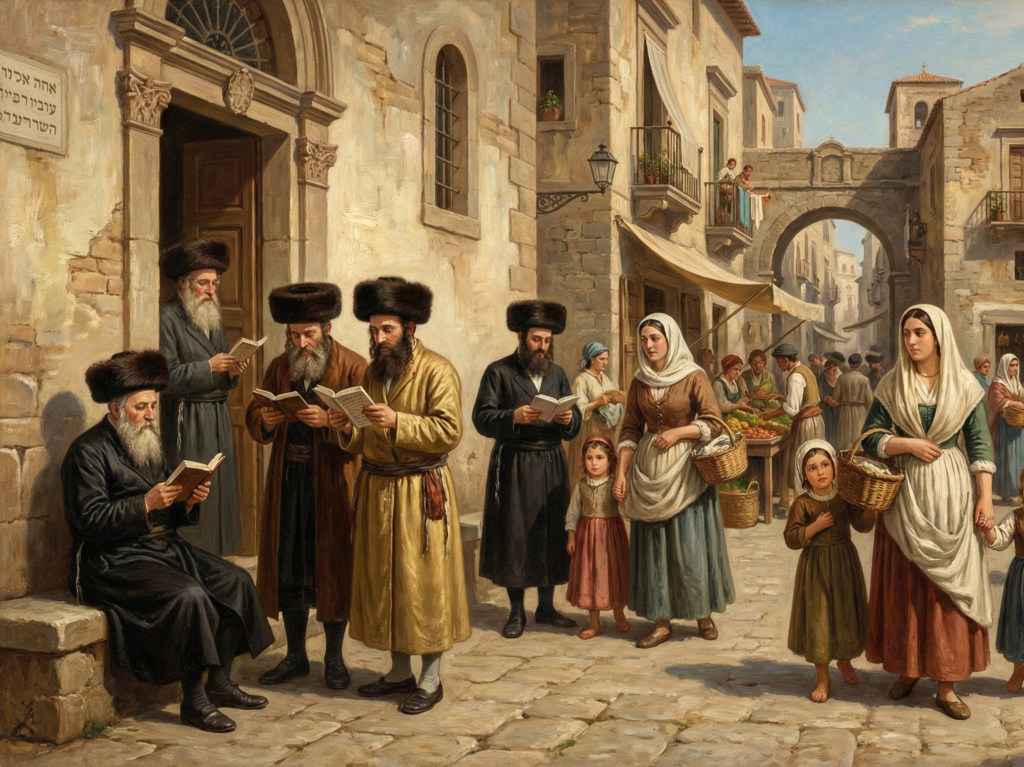
When we peer into the human genome, we rarely find a story as complex, as debated, and ultimately as unifying as that of the Ashkenazi Jew.
For centuries, the history of this group—the Jews of Central and Eastern Europe—was told through religious texts, oral traditions. But in the last two decades, a new historical record has opened up: the one written in their DNA.
The study of Ashkenazi Jewish ancestry has become one of the most celebrated triumphs of modern genetic science. It has settled old debates about origins, revealed surprising connections to other global populations, and painted a vivid picture of migration and community.
If you have Ashkenazi Jew ethnicity in your results, you do not just belong to a religion or a culture; you belong to a distinct genetic population with a history that bridges the ancient Middle East and medieval Europe.
Today, we are unpacking the four powerful truths revealed by Ashkenazi Jew DNA, exploring their ancient formational peoples, their surprising genetic cousins, and the deep ancestral markers that define this unique group.
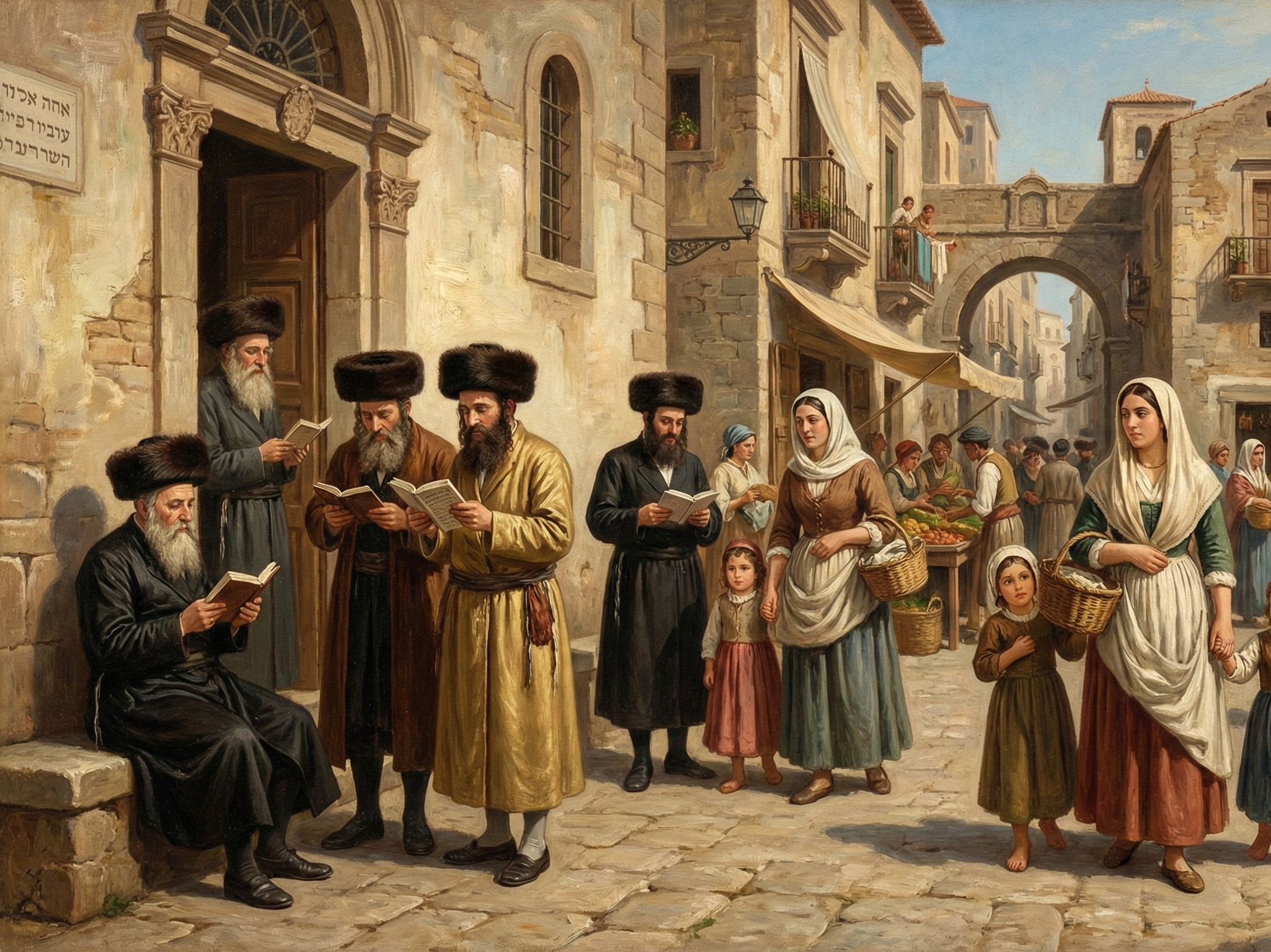
1. The Dual Origin: Where Middle East Meets West
The most significant finding regarding Ashkenazi Jew DNA is that it is not a monolith. It is a tapestry woven from two distinct geographic regions. It is the genetic proof of a people who moved between worlds.
To understand Ashkenazi Jewish descent, you must understand the journey.
The Levantine Foundation
The story begins in the Levant—the Eastern Mediterranean region comprising modern-day Israel, Lebanon, Jordan, and Syria. Genetic studies overwhelmingly confirm that Ashkenazi Jews share significant ancestral roots with other Jewish populations (like Sephardic and Mizrahi Jews) and contemporary Middle Eastern populations.
This is the foundational layer of Ashkenazi Jew ethnicity. It confirms the historical narrative of a people originating in the ancient Near East, exiled by the Roman Empire after the destruction of the Second Temple in 70 CE.
The European Admixture
However, unlike their Middle Eastern cousins who remained in the region, the ancestors of Ashkenazi Jews migrated west. The DNA record shows a profound “admixture event”—a mixing of populations—that occurred as these exiled Judeans settled in the Roman Empire.
Science tells us that the founding population of what would become Ashkenazi Jewry was formed by Middle Eastern men migrating to Southern Europe and marrying local European women. This fusion created a distinct new population that eventually moved north into the Rhineland (modern-day Germany) around the 9th and 10th centuries.
The Hebrew word for this German region was “Ashkenaz.”
Therefore, the history of Ashkenazi Jews is written in a genome that is, on average, about half Middle Eastern (Levantine) and half European.
2. The Italian Connection: A Surprising Genetic Sibling
If you look at a genetic map of Europe and the Near East, Ashkenazi Jews occupy a unique position. They do not cluster tightly with modern Germans, Poles, or Russians, despite living among them for a millennium.
Instead, Ashkenazi Jew DNA clusters most closely with a surprising group: Southern Italians and Sicilians.
Why? This proximity is the “smoking gun” of their migration history. It indicates that the crucial admixture event—the mixing of Middle Eastern Judeans with Europeans—did not happen in Germany or Poland. It happened earlier, in the Mediterranean basin of the Roman Empire, specifically in the Italian peninsula.
Before they moved north across the Alps to become “Ashkenazi,” the ancestral population lived for centuries in Rome and Southern Italy. During this period, they absorbed significant local European DNA.
When this foundational group eventually migrated north to the Rhineland, they were already genetically distinct from their Middle Eastern ancestors, carrying a profile that looked very much like a Southern European one. Because they subsequently remained highly endogamous (marrying only within their community) in Northern and Eastern Europe, this “Southern Italian” genetic snapshot was preserved in time, distinct from the Slavic or Germanic host populations surrounding them.
3. The Genetic Bottleneck: Why All Ashkenazi Jews Are “Cousins”
Perhaps the most defining characteristic of Ashkenazi Jewish ancestry is its incredible genetic uniformity.
Today, there are an estimated 10 to 11 million Ashkenazi Jews worldwide. Yet, geneticists have discovered that this entire current population descends from a remarkably small “founding population” in medieval Europe.
The Bottleneck Event
Studies suggest that around 600 to 800 years ago, due to pogroms, and disease, the total Ashkenazi population dwindled to perhaps as few as 350 individuals.
From this tiny group, the population exploded in the subsequent centuries, spreading east into Poland, Lithuania, and Russia. Because this massive expansion came from such a small pool of ancestors, modern Ashkenazi Jews are all genetically related.
Are all Ashkenazi Jewish related?
Yes, significantly so.
Geneticists estimate that any two unrelated Ashkenazi Jews are, on average, as genetically close as 4th or 5th cousins. They share large segments of identical DNA inherited from those few hundred medieval founders. This phenomenon is known as the “founder effect,” and it is why Ashkenazi Jew ethnicity is so easily identifiable by DNA tests today. It also explains why certain genetic traits (and unfortunately, certain genetic disorders like Tay-Sachs) are more prevalent in the population.
4. The Deep Markers: Major Haplogroups of the Ashkenazi
We can see the story of the dual origin—Middle Eastern fathers and European mothers—most clearly when we look at haplogroups. Haplogroups are deep ancestral lineages passed down unchanged, either from father to son (Y-DNA) or mother to child (mtDNA).
Paternal (Y-DNA) Lineages: The Middle Eastern Echo
The paternal lines of Ashkenazi Jews are overwhelmingly Middle Eastern in origin, reflecting the migration of Judean men into Europe.
- Haplogroup J (specifically J1 and J2): These are classic Middle Eastern lineages. J1 is famous for containing the “Cohen Modal Haplotype,” a specific genetic signature shared by a majority of men with the surname Cohen (priest), indicating a shared male ancestor in the ancient Levant dating back over 2,500 years.
- Haplogroup E1b1b: This is another major lineage found extensively in North Africa, the Near East, and Southern Europe. Its presence in Ashkenazi Jews points to deep roots in the Eastern Mediterranean basin before the diaspora.
Maternal (mtDNA) Lineages: The European Foundation
The maternal side tells the other half of the story. While some maternal lines are Middle Eastern, a significant portion—perhaps the majority—are of local European origin, reflecting the women who married into the migrating Jewish communities during the Roman era.
The most striking evidence of the medieval “bottleneck” is found here. Amazingly, studies have shown that nearly 40% of all Ashkenazi Jews worldwide descend from just four individual women who lived in Europe about 1,000 years ago.
- Haplogroup K (specifically K1a1b1a): This is the most common Ashkenazi maternal lineage. While its deep roots are ancient Near Eastern, the specific branches found in Ashkenazi Jews are believed to have originated in Western Europe, likely Italy or the Rhineland, during the formative years of the community.
- Haplogroup H: This is the most common maternal haplogroup in all of Europe. Its presence among Ashkenazi Jews is a clear marker of the introgression of European female lineages into the community during its migration phases.
In summary, the haplogroup data perfectly matches the autosomal DNA data: a population founded largely by Middle Eastern men and European women, whose descendants passed through a tight demographic bottleneck.
Answering Common Questions About Ashkenazi Identity
The complexity of Jewish identity—which is simultaneously a religion, a culture, and a generic ancestry—often leads to confusion. Let’s clarify the most common questions.
Where do Ashkenazi Jews come from?
They are a diasporic people with a dual origin. Their ancestral roots are in the ancient Levant (Israel/Judea) in the Middle East. However, as a distinct group, they “formed” in Europe—first in Italy and later in the Rhineland (Germany) and Eastern Europe—through the admixture of Levantine immigrants and local European populations.
Are Ashkenazi European?
Yes and No. Geographically and culturally, they have been a European population for nearly two millennia. Genetically, they are a unique hybrid. They are not “indigenous” Europeans in the same way that Poles or Germans are, as roughly half their genome is Middle Eastern. However, they carry significant European ancestry, particularly from Southern Europe. They are best described as a distinct population bridging Europe and the Middle East.
Are all Ashkenazi Jewish?
This depends on definitions. Ashkenazi refers to a specific ethnic and genetic group. Jewish can refer to a religion, a culture, or an ethnicity. Today, thanks to DNA testing, many people are discovering they have Ashkenazi Jew ethnicity genetically, even if they were raised in different religions or have no cultural connection to Judaism. Conversely, a person can convert to Judaism and be religiously Jewish without having Ashkenazi DNA. However, historically, the Ashkenazi genetic group formed almost exclusively within the Jewish religious community due to centuries of endogamy.
Conclusion: A Genetic Legacy
The DNA of the Ashkenazi Jew is a remarkable historical document. It proves that the ancient oral traditions of an origin in the Land of Israel are based in biological fact. Yet, it also reveals a profound connection to Europe—specifically the Mediterranean—that was largely forgotten by history until genetic science uncovered it.
It is the story of a small group of people who moving across continents while maintaining a cohesive genetic and cultural identity. If your DNA reveals this ancestry, you are part of one of the most famous and storied lineages in human history.
Discover Your Unique Heritage
Are you curious about your own connection to this remarkable history? Standard tests often only scratch the surface.
Discover your detailed Ashkenazi Jew ancestry and unlock the secrets of your DNA at: https://nexogeno.com/our-products/