
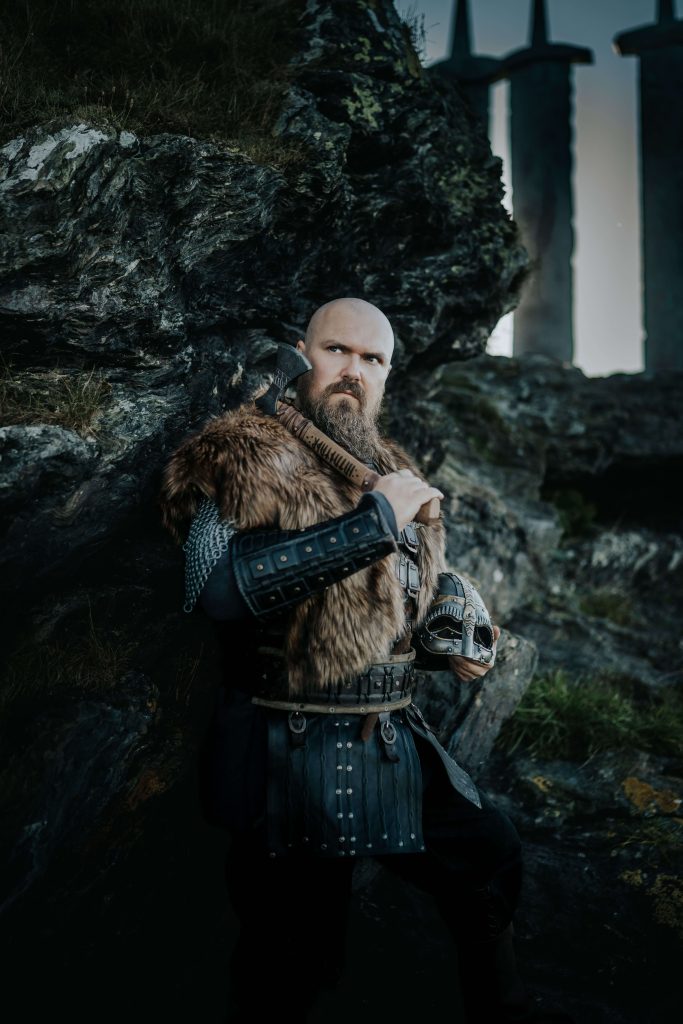
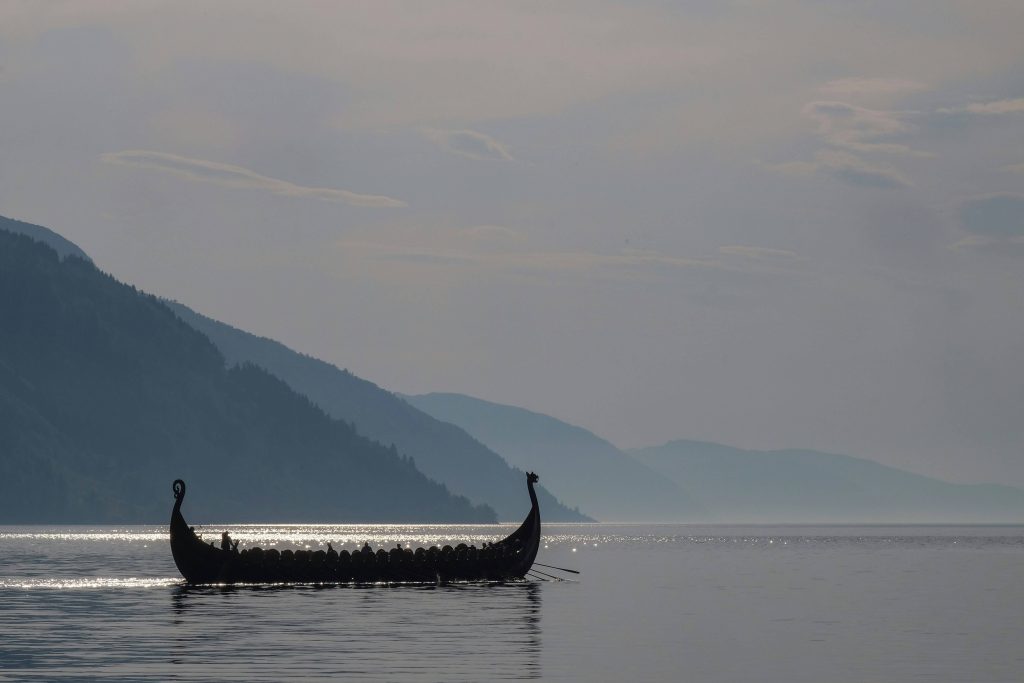
When we imagine the Vikings, we picture dragon-headed longships slicing through icy fjords, fearless raiders storming a monastery at dawn, and a people who sailed from the frozen edge of Europe all the way to Baghdad, Constantinople, and the shores of North America. For over a thousand years, the Norse have haunted our imagination as the ultimate explorers, warriors, and traders.
But here is the question that keeps millions of people awake at night: could that blood be running through your own veins?
The idea of Viking DNA is one of the most searched-for topics in the entire world of ancestry. And it is easy to see why. Almost everyone with roots in Europe — and a surprising number of people beyond it — quietly wonders whether one of their ancestors once gripped an oar, wore an iron helmet, or was buried beneath a Scandinavian burial mound.
The problem is that most commercial DNA tests give you a frustratingly vague answer. They flash a percentage of “Scandinavian” on a pie chart and leave you with more questions than you started with. Does “Scandinavian” mean Viking? Which Viking? From Norway, Sweden, or Denmark? And how would I ever really know?
At NexoGENO, we specialize in the one thing those big companies gloss over: comparing your genome directly against the ancient DNA of the Viking Age itself. Below are the 7 powerful signs that point toward genuine Viking ancestry — some written in your genes, some in your name, and some in the very geography of where your family came from.
Let’s raise the sail.
Who Were the Vikings? A Quick Foundation
Before we hunt for Viking markers in your DNA, it helps to know exactly what — and who — we are looking for.
The Vikings were seafaring Norse people from Scandinavia: the lands we now call Norway, Sweden, and Denmark. The Viking Age is traditionally dated from 793 CE — the shocking raid on the monastery of Lindisfarne in England — to 1066 CE, the year of the Norman Conquest and the Battle of Stamford Bridge.
But here is the crucial detail most people miss: “Viking” was never a single race or a single gene. It was a way of life — raiding, trading, exploring, and settling. Recent ancient-DNA research has shown that the people of Viking-Age Scandinavia were far more genetically diverse than the blond-haired stereotype suggests, carrying influences from Southern Europe and Asia alongside their Nordic core.
That means there is no single “Viking gene” you can test for. Instead, uncovering Viking DNA is about weighing a combination of clues. Here are the seven that matter most.
1. Your Y-DNA Haplogroup Points North
Your Y-DNA — passed from father to son, virtually unchanged, for thousands of years — is one of the most powerful tools for tracing a direct paternal line back to the Viking world.
Three Y-DNA haplogroups are most strongly associated with Viking-Age Scandinavians:
- Haplogroup I1 (defined by the marker M253): This is the strongest Norse signature of all. Haplogroup I1 is heavily concentrated in Norway, Sweden, and Denmark, and its presence — especially outside Scandinavia — is one of the clearest hints of Viking-era ancestry.
- Haplogroup R1a: Common across Scandinavia and Eastern Europe. Certain subclades of R1a are specifically tied to Viking expansion — both westward into the British Isles and eastward along the great river routes into Russia and Ukraine.
- Haplogroup R1b: The most common paternal lineage in all of Western Europe. On its own, R1b tells you very little about Viking ancestry — but the right subclade can still place your line inside the Norse story.
The key word here is subclade. Saying you are “I1” is like saying you are “from Europe.” At NexoGENO, we mine your raw data for the deepest subclade your file allows, so we can tell you not just that your line is Nordic, but which branch of the Norse family tree you sit on.
2. Your Maternal Line (mtDNA) Traces to the North
The Vikings are almost always remembered as men — but half of every Viking legacy travelled through women.
Your mitochondrial DNA (mtDNA) is passed from mother to child, tracing your direct maternal line back to the “clan mothers” of deep antiquity. Standard commercial reports frequently ignore this data entirely, or bury it behind a paid upgrade.
Certain maternal haplogroups appear at high frequencies in Scandinavia and in the regions the Vikings settled. When you combine a Nordic maternal line with a Nordic paternal line, the case for genuine Viking ancestry becomes dramatically stronger. This is exactly why NexoGENO extracts both your Y-DNA and mtDNA haplogroups from a single upload — giving you a complete picture of both sides of your ancient family, not just your father’s line.
3. Your Autosomal DNA Clusters With Scandinavia
Your autosomal DNA is the “big mix” — the DNA you inherit from all of your ancestors, not just one direct line. This is what commercial tests use to build those familiar ethnicity pie charts.
The problem is smoothing. To make results look clean, big testing companies often round away small, “inconvenient” percentages — the very traces that might reveal a single Viking great-great-grandparent. A 4% “Scandinavian” sliver hidden inside a “British” result could be the exact proof of Norse ancestry you’ve been searching for.
NexoGENO does not smooth your results. We run your raw file against far more granular reference populations and advanced admixture tools (like the Principal Component Analysis used in academic studies). Instead of a vague “Scandinavian,” we work to place you near specific Northern European clusters — the genetic fingerprint the Vikings left behind.
4. You Share DNA With Ancient Viking Samples
This is where the search for Viking DNA stops being guesswork and becomes science — and it is where NexoGENO truly stands apart.
In a landmark study, researchers sequenced the genomes of 442 ancient humans from Viking-Age archaeological sites across Europe and Greenland — real Vikings, pulled from real burial grounds and ship graves. This gave the world, for the first time, a genetic “library” of what actual Viking-Age people looked like at the DNA level.
Most companies only compare you to people living today. But your DNA is an archive of the past. NexoGENO specializes in paleo-genetics: we compare your genome directly against these ancient Viking samples. That lets us answer the question you actually care about:
Not “do I look Scandinavian today?” — but “how much DNA do I share with the Vikings who were buried a thousand years ago?”
This is the difference between a geography lesson and a genuine journey into the Viking Age.
5. Your Surname Carries Old Norse Roots
Sometimes the Vikings didn’t just leave their DNA behind — they left their words, and those words survive in family names to this day.
When Norse invaders controlled much of northern and eastern England during the 9th and 10th centuries — a region known as the Danelaw — they left behind a layer of Old Norse-derived surnames that still exist today. Names with Norse origins, and the classic Scandinavian patronymic pattern of “-son” (as in Anderson, Johnson, Thomasson), can be a genuine breadcrumb pointing back to a Viking ancestor.
A word of caution, and a mark of honesty we insist on at NexoGENO: a Norse-sounding surname is a hint, never a proof. Names travel, change, and are adopted. That is exactly why a surname clue is most powerful when your DNA confirms it — which is precisely what an upload to NexoGENO is for.
6. Your Roots Trace to a Viking Settlement Zone
The Vikings didn’t just raid — they settled, farmed, married, and put down roots across a vast swathe of the world. If your family tree leads back to one of these regions, your odds of carrying Viking DNA rise sharply:
- The British Isles — especially the Danelaw of northern and eastern England, plus the Norse-founded city of Dublin in Ireland.
- The Northern Isles — Orkney and Shetland show some of the highest Scandinavian ancestry anywhere outside Scandinavia itself, along with the Western Isles.
- Iceland and the Faroe Islands — settled almost entirely by Norse voyagers and their families.
- Normandy, France — the very name means “land of the Northmen,” settled by Vikings under Rollo.
- Eastern Europe and Russia — where Swedish Vikings, the Rus, travelled the river routes and gave their name to a nation.
Geography alone doesn’t confirm Norse blood — but combined with the genetic signs above, it turns a possibility into a compelling case.
7. Physical Traits Sometimes Linked to Norse Ancestry
We have to talk about it, because everyone asks: the “Viking look.” Tall stature, fair or reddish hair, piercing blue eyes, and a strong build have all been popularly linked to Viking ancestry.
Here is the honest, science-first truth that sets NexoGENO apart from the hype:
These traits are suggestive at best — and often misleading. There is no such thing as a “Viking face.” In fact, ancient-DNA research revealed that many Viking-Age Scandinavians actually had dark hair and brown eyes — the blond stereotype is largely a modern invention. Meanwhile, tall stature and light features are shared by countless Northern European populations who had nothing to do with the Vikings.
So can you spot Viking ancestry in the mirror? Not reliably. A person with jet-black hair can carry strong Norse ancestry, while a blue-eyed blond may carry none at all. The mirror lies. Your DNA doesn’t. This is exactly why the only way to know for sure is to look at the source code itself.
Beyond the Legend: How to Actually Confirm Your Viking Ancestry
You can read about haplogroups. You can research your surname. You can trace your family to the Danelaw. But every one of these signs is only a clue. To turn the legend into a confirmed fact, you need to read your genome directly — and compare it to the Vikings themselves.
This is what NexoGENO was built to do.
Where can I upload my DNA to check for Viking ancestry? Right here. If you have already tested with AncestryDNA, 23andMe, MyHeritage, FamilyTreeDNA, or LivingDNA, you already own the file you need. You do not have to buy a new kit or spit in another tube. Simply download your raw DNA data and upload it to NexoGENO, and we will:
- Extract your Y-DNA and mtDNA haplogroups — including the deepest Norse subclades your data supports.
- Compare you to ancient Viking-Age samples, not just modern populations — our paleo-genetics specialty.
- Reveal the traces others smooth away, showing the granular Scandinavian and Northern European signals hidden inside broad labels.
- Deliver a comprehensive report that reads like a history book in which you are the protagonist.
Stop settling for “Broadly Scandinavian.” It’s time to find out exactly how much of a Viking you really are.
FAQ: Your Top Questions About Viking DNA
How do I know if I have Viking DNA?
There is no single “Viking gene,” so it comes down to weighing several clues together: your Y-DNA and mtDNA haplogroups (especially I1, and Scandinavian subclades of R1a), how strongly your autosomal DNA clusters with Scandinavia, whether your family traces back to a Viking settlement zone like the Danelaw or Orkney, and — most powerfully — how much DNA you share with ancient Viking samples. Uploading your raw data to NexoGENO lets you check all of these at once.
What are the physical signs of Viking ancestry?
Popular culture links Viking ancestry to tall stature, fair or red hair, and blue eyes — but these are unreliable. Ancient DNA shows many real Vikings had dark hair and brown eyes, and light features are common across many non-Viking populations. Physical traits can be a fun starting point, but only a DNA analysis can actually confirm Norse ancestry.
Which DNA haplogroups are considered Viking?
The Y-DNA haplogroups most associated with Viking-Age Scandinavians are I1 (marker M253), which carries the strongest Norse signal, along with R1a and R1b. Importantly, not all Vikings shared one haplogroup, and not everyone with these haplogroups is descended from Vikings — which is why subclade-level detail and ancient-sample comparison matter so much.
Can a DNA test prove I’m a Viking?
Not with 100% certainty — and anyone who promises otherwise isn’t being honest. Because “Viking” was a culture rather than a single genetic group, DNA results are best understood as strongly suggestive rather than absolute proof. What a specialist analysis like NexoGENO’s can do is show you exactly how much DNA you share with authenticated ancient Viking-Age individuals — the closest thing to proof that science currently allows.
How much Viking DNA is “normal”?
There is no fixed number, because it depends entirely on your ancestry. Studies suggest Viking-associated DNA appears in roughly 10% of people in Sweden and around 6% in the United Kingdom, but individuals with deep Scandinavian or Danelaw roots can carry far more. NexoGENO shows you your specific results rather than a generic average.
Where can I upload my DNA to check for Viking ancestry?
You can upload your raw DNA data directly at NexoGENO.com. We accept files from all major testing companies — AncestryDNA, 23andMe, MyHeritage, FamilyTreeDNA, and LivingDNA. If you have a .txt, .csv, or .zip raw data file, our system can read it and run a deep Viking-focused analysis.
Which countries have the most Viking DNA today?
Outside of Scandinavia itself, the strongest Viking genetic legacy is found in Iceland and the Faroe Islands, the Northern Isles of Scotland (Orkney and Shetland), parts of Ireland and northern England (the Danelaw), and Normandy in France. Traces also reach into Eastern Europe and Russia along the old Viking river routes.
Conclusion: The Longship Is Waiting
The Viking story is not just something you read about in history books — for millions of people, it is written quietly inside their own cells. It survives in a haplogroup passed silently from father to son, in a maternal line stretching back to a Norse farmstead, in a surname, in the name of a windswept island your family once called home.
Every one of the seven signs above is a clue. But a clue is not an answer. Somewhere in your raw DNA file — the one that may already be sitting unused on a commercial server — the truth is waiting to be read.
Were your ancestors among the Norse who crossed uncharted seas, raised sails against the horizon, and reshaped the map of the world? There is only one way to know for certain.
Stop wondering. Start uploading. Discover your Viking legacy today.
Discover Your Ancestry
Unlock the true power of your DNA and uncover your Viking roots at: https://nexogeno.com/our-products/
Follow us on: Facebook – Instagram – Reddit
Continue exploring your Northern European roots:
- Read about British DNA: The 5 Powerful Peoples Who Forged Your Ancestry
- Discover Germanic DNA: 5 Powerful Truths About Europe’s Most Successful Genetic Legacy
- Explore the Continental Celts: 5 Great Secrets of Their Enduring European Legacy
- Go further with Beyond Vikings and Romans: Who Were Your Ancient Ancestors?
- Learn why you should Upload Your Raw DNA Data